Sweet & Savory Honey Soy Skillet Chicken Breast (Quick Meal)

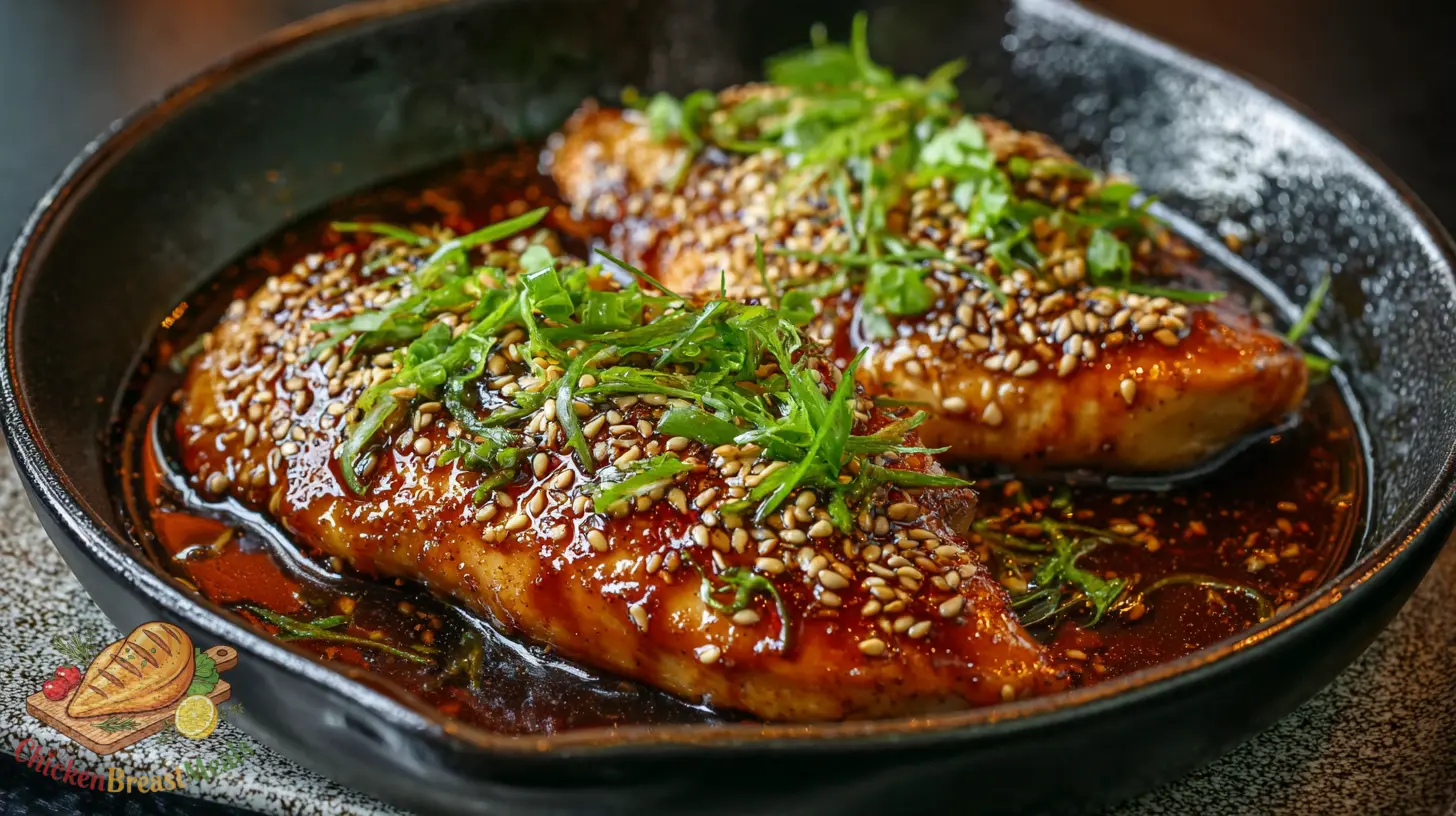
Honey soy skillet chicken breast offers that perfect balance of sweet and savory flavors while remaining remarkably simple to execute on busy weeknights. The true challenge lies in achieving that caramelized exterior without drying out the lean breast meat – a common pitfall when working with high-sugar glazes like honey.
Many home cooks struggle with timing this dish properly, often ending up with either undercooked centers or burnt exteriors. Through extensive testing, we’ve developed a precise technique that leverages controlled heat, proper moisture management, and strategic ingredient sequencing to deliver restaurant-quality results every time.
Test-Kitchen Executive Summary
This honey soy skillet chicken breast recipe employs a dual-heat technique (high heat sear followed by covered medium-heat cooking) to maximize flavor development while maintaining moisture. The honey-soy mixture is introduced in stages to prevent burning while still achieving optimal caramelization through the Maillard reaction. Total cook time is 14-16 minutes with a mandatory 5-minute rest period for optimal protein relaxation and juice redistribution.
The Science of Success: Why This Recipe Works
Technical Foundations
Our approach to honey soy skillet chicken breast builds upon core principles of thermal management and flavor chemistry. The key to success lies in understanding the properties of both the protein structure in chicken breasts and the sugar behavior in the honey component. While exploring our master pan-fried chicken breast guide, we discovered that proper heat control transforms this potentially challenging cut into something spectacular.
The recipe’s effectiveness stems from three critical factors:
1. Controlled Sugar Caramelization: Honey begins to burn at approximately 325°F (163°C), significantly lower than the temperature needed for proper chicken searing. By introducing the honey-soy mixture in stages, we prevent scorching while still developing complex flavors.
2. Moisture Retention Protocol: The breast’s minimal fat content requires strategic moisture management. Our brine-and-rest technique creates a buffer zone that prevents moisture loss during high-heat cooking.
3. Thermal Gradient Management: By employing a dual-heat approach (high for searing, medium-low for cooking through), we create the ideal temperature gradient from exterior to interior, ensuring even cooking without overdrying the outer layers.
Ingredients and Essential Tools
For the Chicken:
- 2 boneless, skinless chicken breasts (approximately 8 oz/225g each)
- 1 tablespoon neutral oil (grapeseed or avocado preferred for high smoke point)
- 1/2 teaspoon kosher salt
- 1/4 teaspoon freshly ground black pepper
For the Honey Soy Sauce:
- 3 tablespoons low-sodium soy sauce
- 2 tablespoons honey (preferably raw)
- 2 cloves garlic, minced (approximately 2 teaspoons)
- 1 tablespoon rice vinegar
- 1 tablespoon fresh ginger, grated
- 1 teaspoon sesame oil
- 1/4 teaspoon red pepper flakes (optional, for heat)
For Garnish:
- 2 green onions, thinly sliced
- 1 teaspoon toasted sesame seeds
- Fresh cilantro leaves (optional)
Essential Tools:
- 10-12 inch cast iron or heavy stainless steel skillet
- Instant-read thermometer
- Tongs
- Tight-fitting lid for the skillet
- Small bowl for sauce preparation
Step-by-Step Instructions
- Prepare the Chicken: Pat chicken breasts completely dry with paper towels. If breasts are uneven in thickness, pound between plastic wrap to uniform 3/4-inch thickness. Season both sides with salt and pepper.
- Mix the Sauce: In a small bowl, combine soy sauce, honey, minced garlic, rice vinegar, grated ginger, sesame oil, and red pepper flakes (if using). Whisk until honey is fully integrated. Reserve 2 tablespoons of the mixture for final glazing.
- Preheat the Skillet: Heat your skillet over medium-high heat until hot but not smoking. Add oil and swirl to coat the surface.
- Initial Sear: Place chicken breasts presentation side down in the hot skillet. Do not move them for 3-4 minutes until a golden-brown crust forms.
- Flip and Reduce Heat: Flip chicken breasts, reduce heat to medium-low, and pour half of the sauce (excluding the reserved portion) over the chicken. Cover with lid.
- Cook to Temperature: Continue cooking covered for 7-9 minutes, or until internal temperature reaches 160°F (71°C) at the thickest part.
- Final Glazing: Remove lid, increase heat to medium, and add remaining non-reserved sauce. Cook uncovered for 1-2 minutes, occasionally spooning sauce over chicken as it thickens.
- Rest and Glaze: Transfer chicken to a cutting board and let rest for 5 minutes. During the rest, brush with reserved sauce for final flavor enhancement.
- Slice and Serve: Slice chicken against the grain at a slight diagonal. Drizzle with any remaining glaze from the skillet, then garnish with sliced green onions, sesame seeds, and optional cilantro.
| Stage | Time | Temperature | Visual Cue |
|---|---|---|---|
| Initial Sear | 3-4 minutes | Medium-high | Golden-brown crust |
| Covered Cooking | 7-9 minutes | Medium-low | Opaque throughout |
| Final Glazing | 1-2 minutes | Medium | Sauce thickened |
| Resting | 5 minutes | N/A | Juices redistributed |
Pro-Tips for Perfect Results
- Temperature Management: Allow chicken to come to room temperature for 20 minutes before cooking to ensure even heat distribution throughout the meat.
- Sauce Viscosity Control: If sauce thickens too rapidly during final glazing, add 1-2 tablespoons of water or chicken broth to maintain optimal consistency without diluting flavor.
- Aromatics Timing: Add minced garlic only during the second half of cooking to prevent bitterness from over-caramelization.
- Sugar Burning Prevention: If you notice the sauce darkening too quickly, temporarily remove the skillet from heat while maintaining coverage.
- Maillard Optimization: For enhanced browning, pat chicken extremely dry and consider a 30-minute uncovered rest in the refrigerator before cooking to further dry the surface.
- Doneness Testing: For optimal precision, aim for 157-160°F (69-71°C) at the thickest point before resting, as carryover cooking will bring the final temperature to the safe 165°F (74°C).
- Flavor Enhancement: For deeper umami notes, substitute 1 teaspoon of the soy sauce with fish sauce or 1/2 teaspoon miso paste diluted in 1/2 teaspoon water.
Storage and Reheating
Proper storage and reheating techniques are crucial for maintaining the quality of your honey soy skillet chicken breast:
Refrigeration: Cool completely before transferring to an airtight container. Store in the refrigerator for up to 3 days. For optimal moisture retention, store chicken with any remaining sauce.
Freezing: While possible for up to 2 months, freezing is not recommended as the texture of the glaze can degrade upon thawing, and the chicken may become drier.
Reheating Protocol:
1. Gentle Reheating: Place chicken and sauce in a covered skillet with 1 tablespoon of water over medium-low heat until internal temperature reaches 145°F (63°C), approximately 5-7 minutes.
2. Alternative Method: For minimal moisture loss, reheat in a 300°F (149°C) oven in a covered dish with 1-2 tablespoons of water until warmed through, about 10-12 minutes.
3. Microwave Emergency Protocol: If absolutely necessary, microwave at 60% power with a damp paper towel cover in 30-second intervals until just heated through.
Re-glazing Technique: To refresh flavor after reheating, prepare a small amount of fresh sauce (1 tsp honey + 1 tsp soy sauce + few drops of sesame oil) and brush onto the reheated chicken.
Related Recipes to Try
If you enjoy this honey soy skillet chicken breast, these complementary recipes utilize similar techniques with different flavor profiles:
- Chicken Breast Stir-Fry Skillet – A versatile technique that applies similar high-heat principles with a colorful vegetable medley
- Ginger Scallion Skillet Chicken – For those who prefer a more aromatic, less sweet flavor profile with the same texture excellence
- Lemon Garlic Butter Skillet Chicken – A Mediterranean-inspired alternative utilizing similar moisture-preservation techniques
- Balsamic Glazed Skillet Chicken – Another sweet-savory balance that employs comparable reduction methods
- Maple Dijon Skillet Chicken – A variation that substitutes honey with maple syrup for a different sweetness profile
FAQs About Honey Soy Skillet Chicken Breast
Why does my honey sauce burn before the chicken is cooked through?
This occurs when the sauce is added too early or heat is too high. Our staged introduction method prevents this by adding the sauce after the initial sear and using a dual-heat approach. Always reduce heat after flipping and cover to create a controlled steam environment.
Can I substitute chicken thighs in this recipe?
Yes, but cooking times will differ. Boneless thighs require approximately 12-14 minutes total cooking time and can withstand higher heat without drying out. The higher fat content will yield a different texture but potentially more forgiving results.
Is there a suitable honey substitute for making this dish less sweet?
Maple syrup (use 25% less) or coconut nectar provides similar functionality with different flavor profiles. For a less sweet version, replace half the honey with additional soy sauce and 1/4 teaspoon of cornstarch to maintain proper glazing consistency.
How can I prevent the chicken from sticking to the skillet?
Three critical factors prevent sticking: properly preheated pan, adequate oil, and patience during the initial sear. The protein must form a complete Maillard crust before attempting to flip. If using stainless steel, deglaze with 1 tablespoon water if sticking occurs.
What’s the ideal internal temperature for this chicken dish?
For optimal texture balance, target 160°F (71°C) before resting, as carryover cooking will bring it to the food-safe 165°F (74°C). Using an instant-read thermometer inserted horizontally into the thickest part ensures accuracy.
Conclusion
Honey soy skillet chicken breast represents the perfect intersection of technical precision and accessible weeknight cooking. The careful balance of sweet and savory elements, combined with our staged cooking approach, transforms a potentially challenging lean protein into a consistently reliable centerpiece meal.
The critical insight we’ve developed through extensive testing is that proper sequencing—from the dual-heat approach to the strategic sauce introduction—creates a protective environment where the chicken can reach proper doneness without sacrificing moisture or flavor development.
While simple in concept, mastering this dish provides a technical foundation that extends to countless other chicken breast preparations. The principles of moisture management, sugar caramelization control, and thermal gradient optimization apply universally across cooking methods and flavor profiles.
For those looking to expand their skillet chicken repertoire, this recipe serves as both a standalone achievement and a gateway to broader culinary exploration.
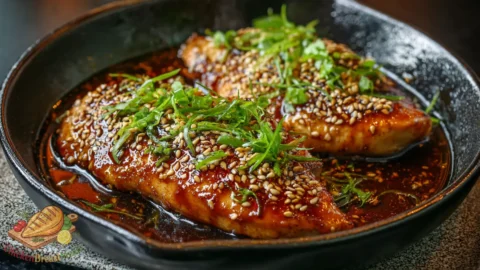
Honey Soy Skillet Chicken Breast

Ingredients
- 2 boneless, skinless chicken breasts approximately 8 oz/225g each
- 1 tablespoon neutral oil grapeseed or avocado preferred
- 1/2 teaspoon kosher salt
- 1/4 teaspoon freshly ground black pepper
- 3 tablespoons low-sodium soy sauce
- 2 tablespoons honey preferably raw
- 2 cloves garlic minced (approximately 2 teaspoons)
- 1 tablespoon rice vinegar
- 1 tablespoon fresh ginger grated
- 1 teaspoon sesame oil
- 1/4 teaspoon red pepper flakes optional, for heat
- 2 green onions thinly sliced
- 1 teaspoon toasted sesame seeds
- fresh cilantro leaves optional, for garnish
Method
- Pat chicken breasts completely dry with paper towels. If breasts are uneven in thickness, pound between plastic wrap to uniform 3/4-inch thickness. Season both sides with salt and pepper.
- In a small bowl, combine soy sauce, honey, minced garlic, rice vinegar, grated ginger, sesame oil, and red pepper flakes (if using). Whisk until honey is fully integrated. Reserve 2 tablespoons of the mixture for final glazing.
- Heat your skillet over medium-high heat until hot but not smoking. Add oil and swirl to coat the surface.
- Place chicken breasts presentation side down in the hot skillet. Do not move them for 3-4 minutes until a golden-brown crust forms.
- Flip chicken breasts, reduce heat to medium-low, and pour half of the sauce (excluding the reserved portion) over the chicken. Cover with lid.
- Continue cooking covered for 7-9 minutes, or until internal temperature reaches 160°F (71°C) at the thickest part.
- Remove lid, increase heat to medium, and add remaining non-reserved sauce. Cook uncovered for 1-2 minutes, occasionally spooning sauce over chicken as it thickens.
- Transfer chicken to a cutting board and let rest for 5 minutes. During the rest, brush with reserved sauce for final flavor enhancement.
- Slice chicken against the grain at a slight diagonal. Drizzle with any remaining glaze from the skillet, then garnish with sliced green onions, sesame seeds, and optional cilantro.
Note
- Allow chicken to come to room temperature for 20 minutes before cooking to ensure even heat distribution.
- If sauce thickens too rapidly during final glazing, add 1-2 tablespoons of water or chicken broth.
- For enhanced browning, pat chicken extremely dry and consider a 30-minute uncovered rest in the refrigerator before cooking.
- For deeper umami notes, substitute 1 teaspoon of the soy sauce with fish sauce or 1/2 teaspoon miso paste.
- Target 160°F internal temperature before resting, as carryover cooking will bring it to food-safe 165°F.