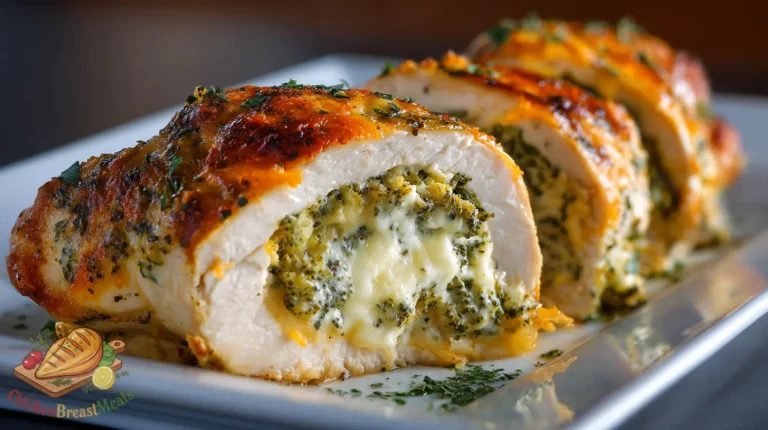
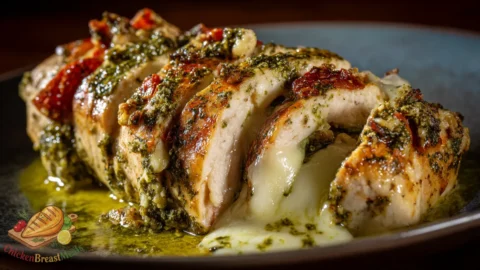
Cheesy Pesto Mozzarella Stuffed Chicken (Rich & Melty)

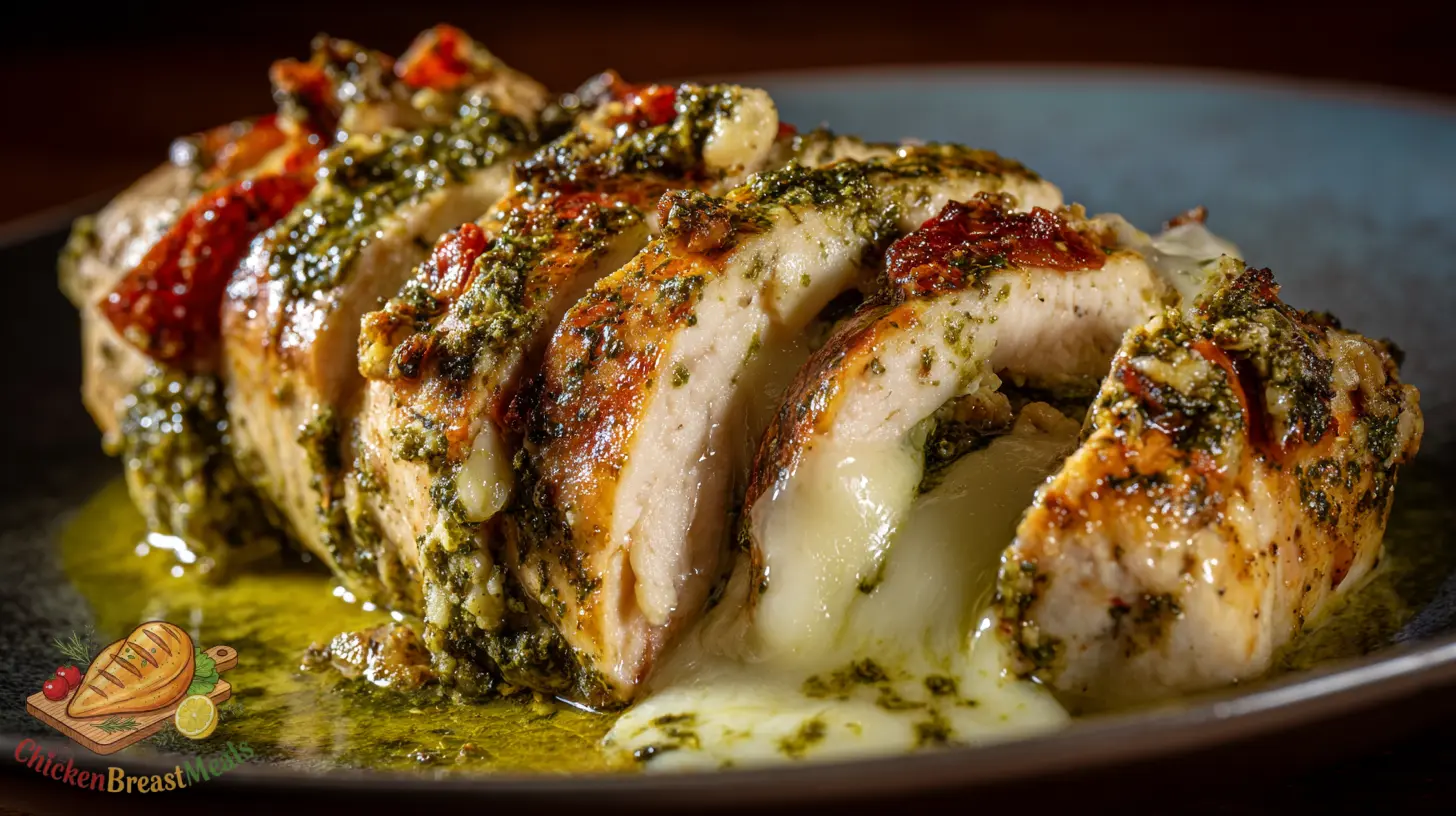
Pesto mozzarella stuffed chicken transforms ordinary chicken breast into a gourmet experience that’s surprisingly easy to execute. The challenge most home cooks face is maintaining moisture in the chicken while achieving that perfect melt of cheese and preventing the filling from completely leaking out during cooking.
Through extensive testing, we’ve developed a foolproof technique that addresses these common pitfalls. By properly butterflying the chicken, using the right temperature control, and employing strategic sealing methods, you’ll create a restaurant-quality stuffed chicken that remains juicy while showcasing the classic Mediterranean flavors of basil pesto and creamy mozzarella.
Test-Kitchen Executive Summary
This pesto mozzarella stuffed chicken recipe employs precision butterfly cutting to create a 1:3 thickness ratio pocket that optimally contains the filling while cooking. The chicken is seared at 425°F initially, then finished at 375°F for controlled cooking, achieving an internal temperature of 165°F while maintaining moisture. The two-stage cooking method ensures proper cheese melt without burning the exterior, while a 5-minute rest period allows for carryover cooking and juice redistribution.
The Science of Success: Why This Recipe Works
Technical Foundations
The success of this stuffed chicken breast relies on several critical factors. First, the butterfly technique creates a pocket with sufficient surface area for filling while maintaining structural integrity. Unlike basic stuffed chicken, we’re employing what’s known as a horizontal pocket cut – a technique we cover extensively in our comprehensive stuffed chicken breast guide – which creates maximum space while minimizing potential leakage points.
The pesto provides both flavor and moisture through its oil content, while the mozzarella’s protein structure transforms during cooking to create that desired stretchy texture. The cheese acts as a moisture-retention mechanism, melting at approximately 130°F and creating a barrier that helps trap the chicken’s natural juices.
Temperature control is essential: too high, and the exterior burns before the chicken cooks through; too low, and you risk drying out the meat before achieving the proper cheese melt. Our two-stage cooking method optimizes both aspects.
Ingredients and Essential Tools
- 2 boneless, skinless chicken breasts (8-10 oz each)
- 4 tablespoons basil pesto (preferably fresh, not jarred)
- 6 oz fresh mozzarella, sliced into ¼-inch pieces
- 1 tablespoon olive oil
- 1 teaspoon kosher salt
- ½ teaspoon freshly ground black pepper
- ½ teaspoon garlic powder
- ¼ teaspoon dried oregano
- 2 tablespoons grated Parmesan cheese (optional)
- Fresh basil leaves for garnish
Essential Equipment
- Sharp chef’s knife or boning knife
- Meat thermometer (preferably instant-read)
- Oven-safe skillet (cast iron preferred)
- Kitchen twine or toothpicks
- Cutting board
- Aluminum foil
Step-by-Step Instructions
- Prepare the chicken: Preheat oven to 425°F. Place the chicken breast on a cutting board and, holding your knife parallel to the board, slice horizontally through the chicken, stopping about ½-inch from the opposite edge. Open the chicken like a book to create a pocket.
- Even thickness: Cover the butterflied chicken with plastic wrap and gently pound the thicker portions to create an even thickness of approximately ½-inch throughout.
- Season base layer: Sprinkle the inside of each chicken breast with ¼ teaspoon salt, ¼ teaspoon pepper, and ¼ teaspoon garlic powder.
- Add filling: Spread 2 tablespoons of pesto evenly across the inside surface of each chicken breast, leaving a ½-inch border. Layer the mozzarella slices over the pesto, again maintaining the border.
- Fold and secure: Fold the chicken back to its original shape. Secure with kitchen twine at 1-inch intervals or use toothpicks placed at a diagonal to hold the pocket closed.
- Season exterior: Brush the outside of each chicken breast with olive oil, then season with the remaining salt, pepper, garlic powder, and the oregano. If using, sprinkle with Parmesan cheese.
- Initial sear: Heat an oven-safe skillet over medium-high heat. Add the chicken breasts and sear for 3-4 minutes on one side until golden brown.
- Oven transition: Flip the chicken, then immediately transfer the skillet to the preheated oven. Reduce oven temperature to 375°F.
- Bake: Cook for 15-18 minutes, or until the internal temperature reaches 160-165°F at the thickest part (avoiding the cheese pocket when measuring).
- Rest: Remove from oven and let rest for 5 minutes under loose foil to allow for carryover cooking and juice redistribution.
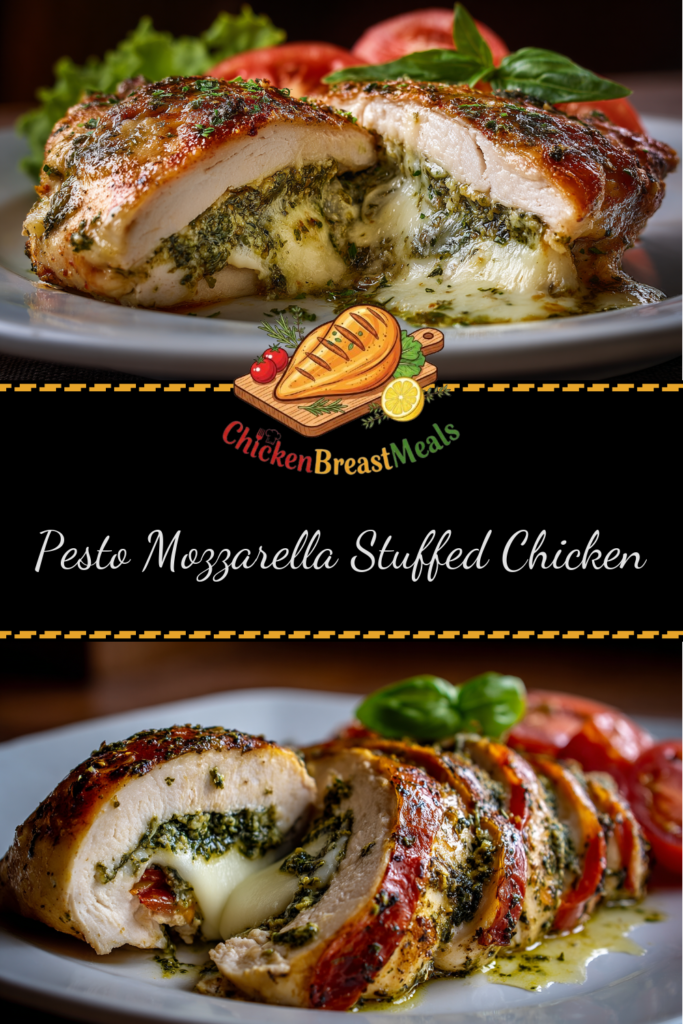
- Slice and serve: Remove kitchen twine or toothpicks. Slice on a diagonal to showcase the filling and garnish with fresh basil leaves.
| Stage | Temperature | Duration | Indicator |
|---|---|---|---|
| Stovetop Sear | Medium-High Heat | 3-4 minutes | Golden brown crust |
| Initial Oven | 425°F | 2 minutes | Transition phase |
| Main Bake | 375°F | 13-16 minutes | 160-165°F internal temp |
| Resting | Ambient (under foil) | 5 minutes | Carryover cooking complete |
Pro-Tips for Perfect Results
- Cheese selection: Low-moisture mozzarella leaks less but has reduced melt quality. Fresh mozzarella provides better melt but requires thorough patting dry with paper towels to remove excess moisture.
- Temperature management: Remove chicken from refrigerator 20-30 minutes before cooking to ensure even cooking from exterior to center.
- Pesto density: If your pesto is particularly oily, drain some excess oil or mix with 1 teaspoon of breadcrumbs to create a thicker consistency that will remain in place during cooking.
- Securing technique: When using kitchen twine, tie from center outward in both directions for optimal sealing. If using toothpicks, insert at a 45° angle and ensure they’re completely submerged in the meat to prevent burning.
- Preventing blowouts: Score the top surface of the chicken with 3-4 shallow diagonal cuts to allow steam to escape, reducing the chance of filling explosions.
- Thermometer placement: When checking temperature, insert into the thickest part of the chicken meat, avoiding both the filling and the skillet bottom for an accurate reading.
- Resting mechanics: Rest the chicken on a wire rack with foil tented over top rather than directly on a plate to prevent steam condensation from softening the bottom crust.
Storage and Reheating
Refrigeration: Store cooled stuffed chicken in an airtight container for up to 3 days. For best results, slice before refrigerating to prevent moisture buildup in the center pocket.
Freezing: While possible, freezing is not ideal as it compromises the texture of both the mozzarella and the chicken. If necessary, wrap individual portions tightly in plastic wrap, then aluminum foil, and freeze for up to 1 month.
Reheating: For optimal results, reheat in a 300°F oven. Place sliced chicken on a wire rack over a baking sheet and cover loosely with foil. Heat for 15-20 minutes until warmed through (120°F internal temperature). Alternatively, microwave on 50% power with a damp paper towel covering the chicken to prevent drying.
Texture restoration: To restore exterior crispness after refrigeration, finish reheated chicken with a quick 2-minute broil, watching carefully to prevent burning.
Related Recipes to Try
- Bruschetta Topped Chicken Breast – A lighter Mediterranean option that pairs beautifully with the same flavor profile
- Prosciutto Wrapped Stuffed Chicken – An elevated stuffed chicken variation with an elegant presentation
- Sun-Dried Tomato and Goat Cheese Stuffed Chicken – A tangy alternative to the mozzarella version
- Spinach and Ricotta Stuffed Chicken Breast – A creamy, vegetable-forward option
FAQs About Pesto Mozzarella Stuffed Chicken
Can I use chicken thighs instead of breasts for this recipe?
Yes, boneless skinless chicken thighs can be substituted, but they require a different butterflying technique. Pound thighs to an even thickness, then place filling in the center and fold the edges over, securing with twine. Cooking time will decrease to approximately 12-15 minutes total.
Why is my cheese leaking out during cooking?
Excessive cheese leakage typically occurs for three reasons: 1) Insufficient sealing of the chicken pocket, 2) Overfilling with cheese, or 3) Cooking at too high a temperature. Ensure you’re maintaining a 1/2-inch border around the filling and secure the pocket thoroughly. Consider reducing your oven temperature by 25°F and extending the cooking time slightly.
Can I prepare this dish ahead of time?
Yes, you can butterfly and stuff the chicken up to 24 hours in advance. Store tightly wrapped in the refrigerator, but do not apply the exterior seasonings until just before cooking. Allow to come to room temperature for 30 minutes before cooking for best results.
How do I prevent the chicken from drying out?
Three key factors prevent dryness: 1) Don’t overcook (use a thermometer to pull at 160°F), 2) Use the two-stage cooking method described, and 3) Rest properly after cooking. The pesto’s oil content also helps maintain moisture.
Can I use store-bought pesto?
Yes, but quality varies significantly. Look for refrigerated pesto rather than shelf-stable varieties, and consider enhancing store-bought pesto with 1 teaspoon of fresh lemon zest and an extra tablespoon of freshly grated Parmesan to brighten the flavors.
Conclusion
Pesto mozzarella stuffed chicken represents the perfect balance of technical cooking skill and approachable methodology. The key to success lies in understanding the interplay between protein structure, moisture retention, and heat management. By controlling these variables through proper butterflying, strategic filling placement, and the two-stage cooking process, you create a dish that delivers consistent results.
This recipe demonstrates how traditional Mediterranean flavor combinations can be optimized through modern cooking techniques. The pesto provides aromatic compounds and essential oils that penetrate the protein fibers during cooking, while the mozzarella’s milk fat content creates an internal moisture barrier. What elevates this from standard stuffed chicken is the attention to technical detail in preparation and cooking methodology.
Master this fundamental approach to stuffed chicken, and you’ll gain transferable skills applicable to countless variations. The techniques of pocket creation, filling balance, and temperature control form the foundation for all successful stuffed protein preparations.
Cheesy Pesto Mozzarella Stuffed Chicken

Ingredients
- 2 boneless, skinless chicken breasts (8-10 oz each)
- 4 tablespoons basil pesto (preferably fresh)
- 6 oz fresh mozzarella sliced into ¼-inch pieces
- 1 tablespoon olive oil
- 1 teaspoon kosher salt
- ½ teaspoon freshly ground black pepper
- ½ teaspoon garlic powder
- ¼ teaspoon dried oregano
- 2 tablespoons grated Parmesan cheese optional
- fresh basil leaves for garnish
Method
- Preheat oven to 425°F. Place the chicken breast on a cutting board and, holding your knife parallel to the board, slice horizontally through the chicken, stopping about ½-inch from the opposite edge. Open the chicken like a book to create a pocket.
- Cover the butterflied chicken with plastic wrap and gently pound the thicker portions to create an even thickness of approximately ½-inch throughout.
- Sprinkle the inside of each chicken breast with ¼ teaspoon salt, ¼ teaspoon pepper, and ¼ teaspoon garlic powder.
- Spread 2 tablespoons of pesto evenly across the inside surface of each chicken breast, leaving a ½-inch border. Layer the mozzarella slices over the pesto, again maintaining the border.
- Fold the chicken back to its original shape. Secure with kitchen twine at 1-inch intervals or use toothpicks placed at a diagonal to hold the pocket closed.
- Brush the outside of each chicken breast with olive oil, then season with the remaining salt, pepper, garlic powder, and the oregano. If using, sprinkle with Parmesan cheese.
- Heat an oven-safe skillet over medium-high heat. Add the chicken breasts and sear for 3-4 minutes on one side until golden brown.
- Flip the chicken, then immediately transfer the skillet to the preheated oven. Reduce oven temperature to 375°F.
- Cook for 15-18 minutes, or until the internal temperature reaches 160-165°F at the thickest part (avoiding the cheese pocket when measuring).
- Remove from oven and let rest for 5 minutes under loose foil to allow for carryover cooking and juice redistribution.
- Remove kitchen twine or toothpicks. Slice on a diagonal to showcase the filling and garnish with fresh basil leaves.
Note
- Pat mozzarella dry with paper towels to prevent excess moisture in the filling.
- For best results, use a meat thermometer to ensure chicken is properly cooked without overcooking.
- Allow chicken to rest at room temperature for 20-30 minutes before cooking for more even results.
- If your pesto is very oily, mix with 1 teaspoon of breadcrumbs to thicken it.
- Score the top of the chicken with shallow cuts to prevent filling blowouts during cooking.