Tropical Mango Salsa Topped Chicken (Fresh & Juicy)

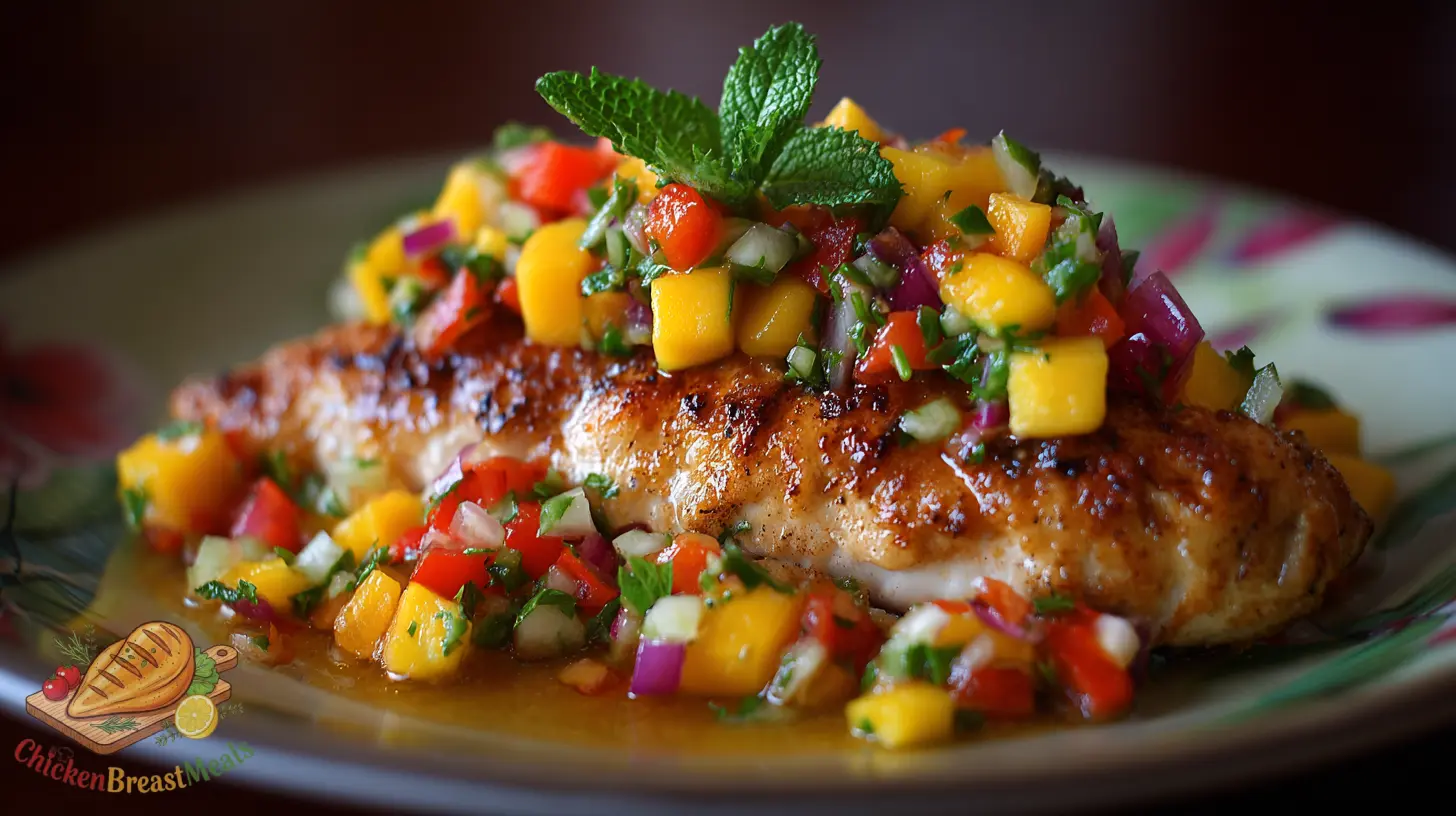
Mango salsa topped chicken delivers a vibrant fusion of sweet, tangy, and savory flavors that transforms ordinary chicken breast into a tropical culinary experience. The challenge many home cooks face is balancing the sweetness of perfectly ripened mangoes with the acidity needed to complement lean chicken protein, while ensuring the chicken remains moist throughout the cooking process.
Additionally, achieving the ideal texture contrast between the tender chicken and the fresh crunch of the salsa components requires precise timing and temperature control. This technical guide solves these challenges through tested methods that maximize flavor infusion while maintaining optimal protein structure.
Test-Kitchen Executive Summary
This mango salsa topped chicken recipe employs a dual-cooking method (searing followed by oven-finishing) to achieve optimal Maillard reaction on the protein exterior while maintaining 165°F internal temperature without moisture loss. The salsa incorporates enzymatic tenderization from fresh mango (containing protease) while balancing pH with lime juice at approximately 2.3, creating a complementary acid profile that enhances chicken flavor compounds. Strategic resting periods between cooking and topping ensure protein reabsorption of juices and prevent premature salsa breakdown.
The Science of Success: Why This Recipe Works
Technical Foundations
The technical success of this recipe relies on understanding protein behavior under heat and acid conditions. Chicken breast, primarily composed of myosin and actin proteins, begins to denature and tighten at temperatures above 140°F. To counteract this potential drying effect, we implement a controlled heat approach that maximizes surface browning while minimizing moisture loss – a technique similar to what we explore in our comprehensive stuffed and marinated chicken breast guide, which details the science of moisture retention in lean proteins.
The mango salsa component introduces naturally occurring proteolytic enzymes (primarily protease) that gently break down muscle fibers on contact, enhancing tenderness. The acid component from lime juice (pH 2.0-2.4) creates a mild denaturing effect on the chicken’s surface, enhancing flavor penetration while the sugar compounds in mango (approximately 14g per 100g) facilitate enhanced Maillard reaction during cooking, creating deeper flavor notes.
Ingredients and Essential Tools
For the Chicken:
- 4 boneless, skinless chicken breasts (approximately 6-8 oz each)
- 2 tablespoons high smoke-point oil (avocado or grapeseed preferred)
- 1 tablespoon kosher salt (Diamond Crystal brand recommended)
- 1 teaspoon freshly ground black pepper
- 1 teaspoon garlic powder
- ½ teaspoon ground cumin
For the Mango Salsa:
- 2 ripe mangoes, firm but yielding (Tommy Atkins or Ataulfo varieties preferred)
- ½ medium red onion, finely diced (approximately 100g)
- 1 medium red bell pepper, finely diced
- 1-2 jalapeños, seeds removed and minced (adjust for heat preference)
- ¼ cup fresh cilantro leaves, chopped
- 2 tablespoons fresh lime juice (approximately 1-2 limes)
- 1 tablespoon extra virgin olive oil
- ½ teaspoon kosher salt
- ¼ teaspoon freshly ground black pepper
Essential Tools:
- Instant-read digital thermometer
- 10-12″ oven-safe skillet (cast iron preferred)
- Sharp chef’s knife
- Heavy-duty cutting board (separate boards for chicken and produce)
- Mixing bowls (non-reactive for salsa components)
- Kitchen tongs
Step-by-Step Instructions
- Prepare the Chicken: Remove chicken breasts from refrigeration 20-30 minutes before cooking to allow them to approach room temperature. Pat thoroughly dry with paper towels to ensure proper searing. Combine salt, pepper, garlic powder, and cumin in a small bowl, then season chicken breasts evenly on both sides.
- Preheat Equipment: Position oven rack in middle position and preheat to 375°F (190°C). Heat oven-safe skillet over medium-high heat until it reaches approximately 400°F surface temperature.
- Sear the Chicken: Add oil to the hot skillet. When oil shimmers but before it smokes, carefully place seasoned chicken breasts presentation-side down in the pan. Sear undisturbed for 3-4 minutes until deep golden brown crust forms.
- Finish in Oven: Flip chicken breasts, then immediately transfer skillet to preheated oven. Bake until internal temperature reaches 163°F (73°C) at thickest point, approximately 8-12 minutes depending on thickness.
- Rest the Protein: Remove skillet from oven (using protective gloves). Transfer chicken to a clean plate and tent loosely with aluminum foil. Rest for 5-7 minutes, during which carryover cooking will bring temperature to safe 165°F while allowing muscle fibers to reabsorb juices.
- Prepare Mango Salsa: While chicken rests, dice mangoes into ¼-inch cubes by first slicing off the sides around the pit, scoring the flesh in a grid pattern, then inverting and cutting cubes away from skin. Combine diced mango with all remaining salsa ingredients in a non-reactive bowl, gently mixing to avoid crushing delicate mango flesh.
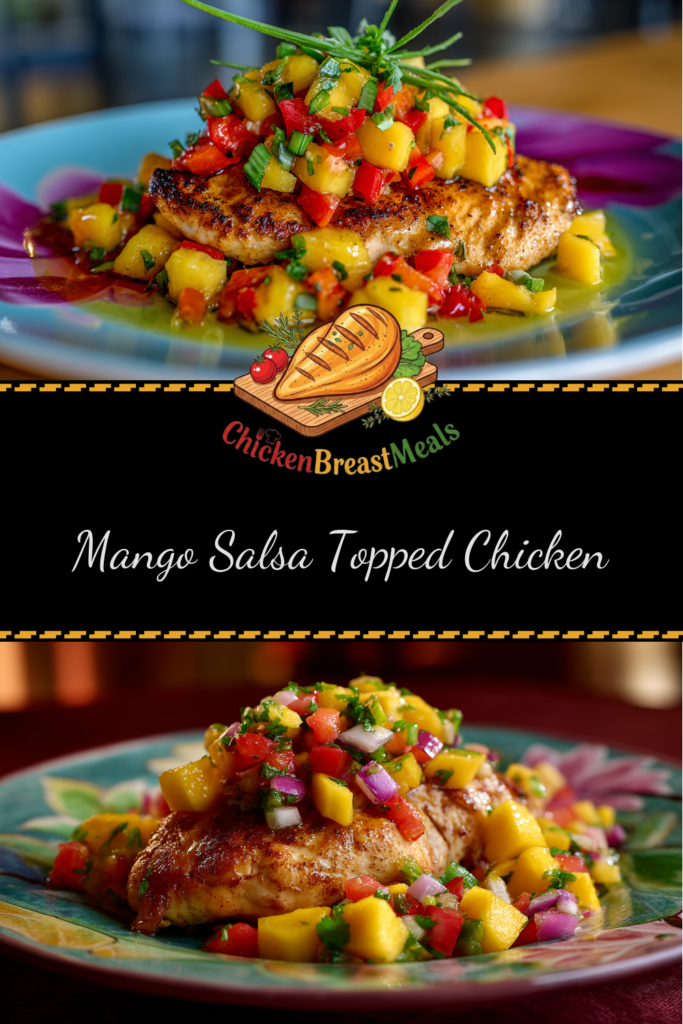
- Plate and Serve: Place rested chicken breasts on serving plates. Top generously with prepared mango salsa, ensuring even distribution. Garnish with additional cilantro leaves if desired.
| Process Stage | Time | Temperature | Critical Quality Indicators |
|---|---|---|---|
| Chicken Rest (pre-cooking) | 20-30 minutes | Room temperature approach | Surface dryness, even temperature |
| Stovetop Searing | 3-4 minutes per side | Medium-high (≈400°F surface) | Golden-brown crust formation |
| Oven Finishing | 8-12 minutes | 375°F ambient | Internal temp 163°F at thickest point |
| Final Rest | 5-7 minutes | Carryover to 165°F | Moisture reabsorption, juice retention |
| Salsa Holding Time | 5 minutes minimum | Room temperature | Flavor development, texture stability |
Pro-Tips for Perfect Results
- Mango Selection Precision: Choose mangoes that yield slightly to pressure but aren’t soft. For ideal enzyme activity and texture, mangoes should be 80-90% ripe, exhibiting fragrance at the stem end without excessive softness.
- Temperature Gradient Management: To ensure even cooking, pound chicken breasts to uniform 3/4″ thickness using a meat mallet with plastic wrap barrier, focusing on thicker portions to achieve consistent protein denaturation rates.
- Acid Balance Control: For optimal mango salsa pH (target 3.8-4.2), add lime juice incrementally and taste-test. If mangoes are particularly sweet, increase acidity slightly; if using less ripe mangoes, reduce lime quantity by 25%.
- Heat Modulation: For enhanced complexity, char 50% of the diced bell pepper in a dry skillet before incorporating into salsa, creating layered flavor compounds through partial pyrolysis of pepper sugars.
- Enzyme Activation Timing: Prepare salsa at least 15 minutes (but not more than 2 hours) before serving to allow controlled enzymatic activity that enhances flavor while maintaining structural integrity of ingredients.
- Texture Preservation: To maintain optimal moisture balance between chicken and salsa, apply salsa immediately before serving rather than during the resting phase to prevent premature protein rehydration and texture compromise.
- Thermal Management: Serve on room-temperature plates rather than chilled ones to prevent rapid cooling of the chicken, which can cause muscle fiber contraction and toughening.
Storage and Reheating
For optimal quality preservation, store chicken and mango salsa components separately in airtight containers. The cooked chicken will maintain food safety and reasonable quality for up to 3 days when refrigerated at 34-38°F. The mango salsa, due to its high moisture and enzyme content, is best consumed within 24 hours, after which texture degradation accelerates significantly.
When reheating the chicken component, employ a gentle warming method to prevent protein tightening and moisture loss:
1. Bring chicken to room temperature for 10 minutes
2. Preheat oven to 275°F (low temperature minimizes additional moisture loss)
3. Place chicken on a wire rack over a baking sheet
4. Cover loosely with aluminum foil to create a moisture-retaining environment
5. Heat until internal temperature reaches 125-130°F (approximately 10-15 minutes)
6. Rest for 3 minutes before topping with fresh salsa
Avoid microwave reheating which creates uneven temperature gradients and accelerates moisture loss from protein structures. Fresh salsa should always be prepared new rather than stored, as the cellular breakdown during storage significantly compromises textural integrity.
Related Recipes to Try
- Cilantro Lime Chicken Marinade: This complementary marinade creates an ideal flavor base for mango salsa topping, with compatible acid profiles and enhanced herbal notes.
- Chimichurri Sauce for Chicken: For an alternate flavor direction with similar application technique, this herbaceous sauce provides a more robust counterpoint to neutral chicken protein.
- Pineapple-Jalapeño Glazed Chicken: Explore another tropical fruit application with different enzymatic properties and higher sugar content for enhanced caramelization.
- Coconut-Curry Chicken with Mango Chutney: A cooked fruit application that demonstrates how heat transforms the same base ingredients into more complex flavor compounds.
- Citrus-Marinated Grilled Chicken: Alternative acid-based preparation method that creates complementary flavor profiles suitable for fruit-based toppings.
FAQs About Mango Salsa Topped Chicken
Can I prepare the mango salsa a day ahead?
While technically possible, preparing mango salsa more than 3-4 hours in advance leads to significant quality degradation. The enzymatic activity continues during storage, breaking down cell walls and creating a mushy texture. The acids in lime juice further denature delicate mango flesh. If necessary, you can prep all ingredients separately and combine just before serving.
Why is my chicken dry despite following temperature guidelines?
Several technical factors could contribute: 1) Protein quality – higher-grade chicken typically contains 23-25% protein and optimal moisture ratios; 2) Inadequate pre-sear resting time, preventing even heat distribution; 3) Excessive carryover cooking during rest period – use a smaller skillet or remove from the hot pan immediately; 4) Genetic factors – modern rapidly-grown chickens sometimes exhibit poor moisture retention characteristics.
How can I prevent the mango from turning mushy?
Control three critical variables: 1) Ripeness – select mangoes with slight give but firm flesh; 2) Cutting technique – use a sharp knife for clean cuts that minimize cellular damage; 3) Salt timing – add salt just before serving as it draws moisture through osmotic pressure, accelerating texture breakdown.
Can I substitute canned mango for fresh in the salsa?
Not recommended. Canned mangoes undergo thermal processing that fundamentally alters cellular structure, destroys active enzymes, and modifies flavor compounds. The high sugar syrup typically used in canning also significantly alters the acid-sugar balance critical to proper salsa functionality. Frozen mango chunks (thawed and well-drained) present a better alternative when fresh is unavailable.
What’s the best way to determine perfect mango ripeness?
Employ a multi-sensory assessment: 1) Gentle pressure should yield slight give without lasting indentation; 2) Sniff the stem end – a fruity, sweet aroma indicates proper ripeness; 3) Color is variety-dependent but generally should show characteristic hue development; 4) Avoid mangoes with wrinkled skin or fermented smell, indicating over-ripeness and compromised internal structure.
Conclusion
Mango salsa topped chicken represents a technical balance of protein cookery and fresh fruit preparation that creates a harmonious flavor profile through careful manipulation of heat, acid, and enzymatic activity. The success of this dish hinges on understanding the chemical interactions between the chicken’s protein structures and the complex matrix of compounds present in fresh mango and accompanying ingredients.
The dual-stage cooking method presented here optimizes surface browning while preserving internal moisture, creating the ideal canvas for the vibrant, enzyme-rich salsa. By controlling variables such as temperature gradients, acid balance, and component integration timing, home cooks can achieve restaurant-quality results with consistent precision.
For continued exploration of chicken preparation techniques, the methods presented here can be adapted to various flavor profiles while maintaining the core principles of moisture retention and complementary texture development. The technical foundations established in this guide provide a framework for creative experimentation while ensuring reliable, high-quality outcomes.
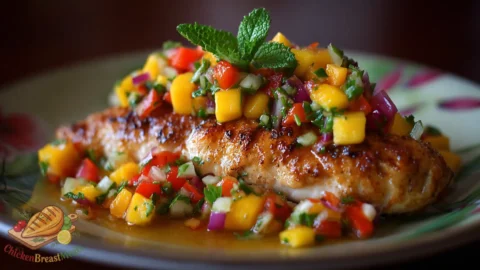
Tropical Mango Salsa Topped Chicken

Ingredients
- 4 boneless, skinless chicken breasts 6-8 oz each
- 2 tablespoons high smoke-point oil avocado or grapeseed preferred
- 1 tablespoon kosher salt divided between chicken and salsa
- 1 teaspoon black pepper freshly ground
- 1 teaspoon garlic powder
- 1/2 teaspoon ground cumin
- 2 ripe mangoes firm but yielding
- 1/2 red onion finely diced
- 1 red bell pepper finely diced
- 1-2 jalapeños seeds removed and minced
- 1/4 cup fresh cilantro leaves chopped
- 2 tablespoons fresh lime juice approximately 1-2 limes
- 1 tablespoon extra virgin olive oil for salsa
Method
- Remove chicken breasts from refrigeration 20-30 minutes before cooking. Pat thoroughly dry with paper towels. Combine 1 tablespoon salt, pepper, garlic powder, and cumin, then season chicken breasts evenly on both sides.
- Position oven rack in middle position and preheat to 375°F. Heat oven-safe skillet over medium-high heat until approximately 400°F surface temperature.
- Add oil to the hot skillet. When oil shimmers, place chicken breasts presentation-side down. Sear undisturbed for 3-4 minutes until deep golden brown crust forms.
- Flip chicken breasts, then immediately transfer skillet to preheated oven. Bake until internal temperature reaches 163°F at thickest point, approximately 8-12 minutes.
- Remove skillet from oven. Transfer chicken to a clean plate and tent loosely with foil. Rest for 5-7 minutes.
- While chicken rests, prepare mango salsa. Dice mangoes into ¼-inch cubes. Combine with red onion, bell pepper, jalapeños, cilantro, lime juice, olive oil, and remaining salt and pepper in a non-reactive bowl.
- Place rested chicken breasts on serving plates. Top generously with prepared mango salsa. Serve immediately.
Note
- For optimal texture, choose mangoes that are ripe but still firm.
- Pound chicken breasts to uniform thickness for even cooking.
- Prepare salsa just before serving for best texture and flavor development.
- For extra flavor, char some of the bell pepper before adding to the salsa.
- Store chicken and salsa separately if not consuming immediately.