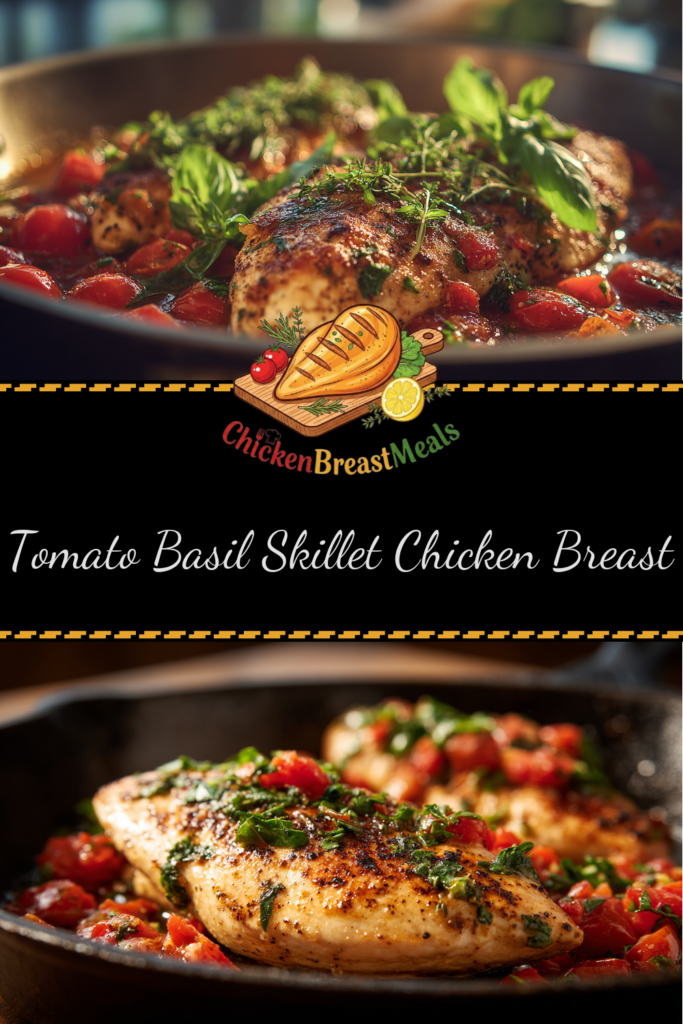
Fresh Tomato Basil Skillet Chicken Breast (Light & Flavorful)

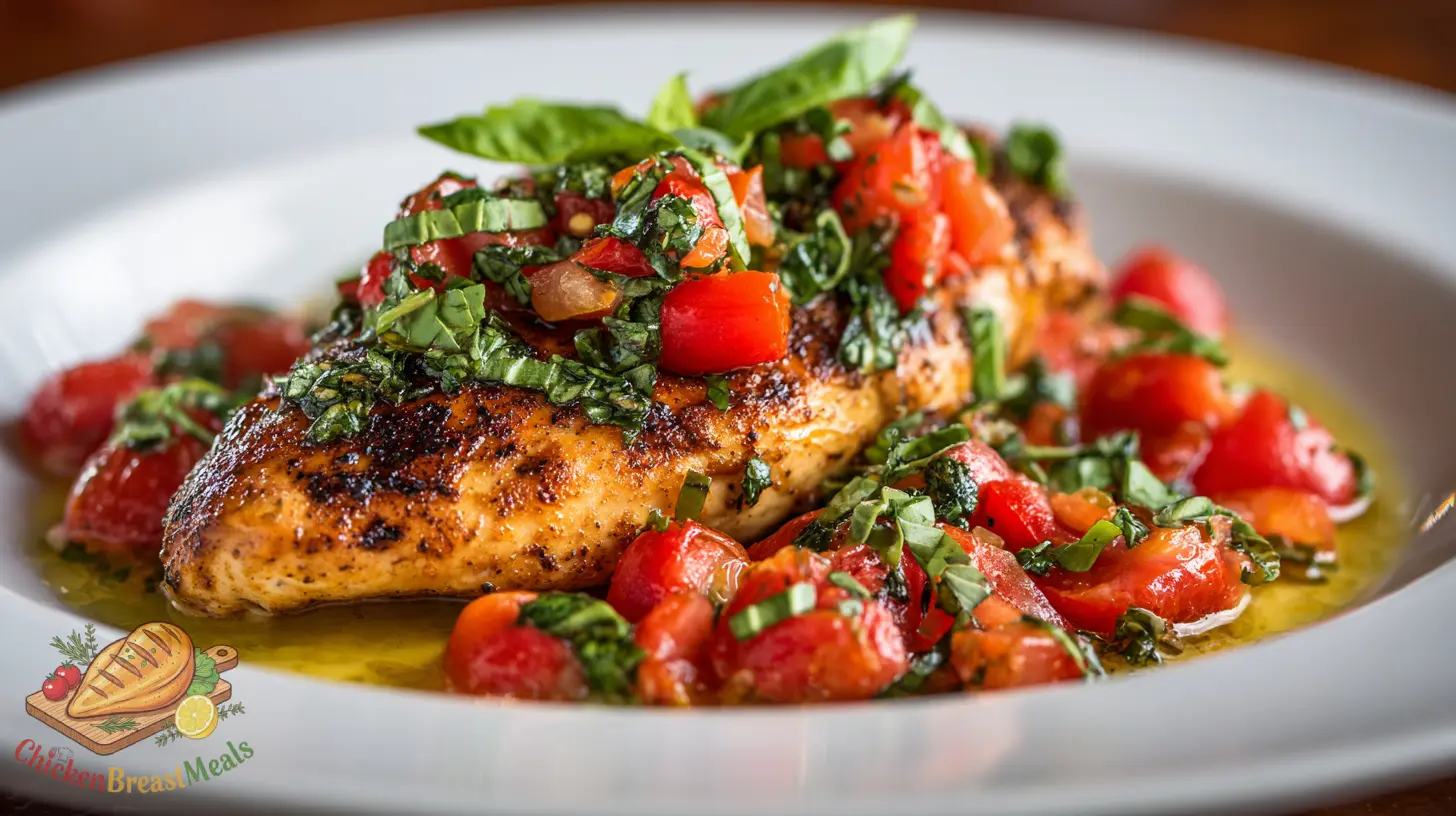
Tomato basil skillet chicken breast represents the perfect intersection of weeknight convenience and gourmet flavor. This technique-driven approach transforms everyday chicken breasts into a restaurant-quality meal by employing precise temperature control and layered flavor development. The challenge many home cooks face is achieving properly cooked chicken that remains juicy while developing a complex sauce in the same pan.
Most tomato basil chicken recipes either overcook the protein or produce a watery, under-reduced sauce. Our test kitchen has solved both issues through careful thermal management and strategic ingredient staging, ensuring the chicken and sauce reach their optimal states simultaneously.
Test-Kitchen Executive Summary
This tomato basil skillet chicken breast recipe employs a dual-temperature cooking method that ensures perfectly cooked 165°F internal temperature protein while developing a concentrated sauce through strategic reduction. Key techniques include the initial high-heat sear (425-450°F) followed by a gentle simmer (325-350°F) with acidic tomatoes and volatile basil compounds added at precise moments to maximize flavor development without degradation. The integration of pan fond through deglazing creates nucleation sites for proper emulsion stability in the final sauce.
The Science of Success: Why This Recipe Works
Technical Foundations
The technical success of this recipe hinges on three critical factors: proper heat management, strategic ingredient staging, and sauce development. Unlike basic pan-fried preparations, this method builds complex flavors through the Maillard reaction during the initial sear, creating flavor compounds that form the foundation of the sauce. This technique builds upon our fundamental pan-fried chicken breast principles but adds several critical refinements specific to the tomato-basil flavor profile.
The acidity in tomatoes helps tenderize chicken proteins through partial denaturation while the fat-soluble compounds in basil require proper extraction techniques. By adding these ingredients at precise moments in the cooking process, we maximize their contribution to the final dish. The sauce reduction occurs simultaneously with the final chicken cooking phase, allowing for perfect timing of both components.
Flavor Chemistry Considerations
Tomatoes contain glutamates that act as natural flavor enhancers, while basil provides essential oils (primarily eugenol and linalool) that contribute aromatic complexity. When heated in oil, these compounds infuse throughout the dish but can volatilize if overheated. Our controlled temperature approach preserves these compounds while allowing for proper sauce reduction.
Ingredients and Essential Tools
Core Ingredients
- 2 boneless, skinless chicken breasts (6-8 oz each)
- 3 tablespoons extra virgin olive oil, divided
- 1 teaspoon kosher salt
- ½ teaspoon freshly ground black pepper
- 1 medium shallot, finely diced (about ¼ cup)
- 3 garlic cloves, thinly sliced
- ¼ teaspoon red pepper flakes (optional)
- 1½ cups cherry tomatoes, halved
- ¼ cup chicken stock or white wine
- 1 tablespoon balsamic vinegar
- ¼ cup fresh basil leaves, torn, plus additional for garnish
- 2 tablespoons cold unsalted butter, cubed (for finishing)
Essential Equipment
- 10-12 inch stainless steel or cast iron skillet
- Instant-read thermometer
- Meat tenderizer or heavy bottom pan
- Splatter guard
- Silicone-tipped tongs
Step-by-Step Instructions
- Prepare the chicken: Pat chicken breasts dry with paper towels (removing surface moisture ensures proper searing). If breasts are uneven in thickness, place between plastic wrap and gently pound to an even ¾-inch thickness. Season both sides with ¾ teaspoon kosher salt and ¼ teaspoon black pepper.
- Preheat the skillet: Heat a 10-12 inch skillet over medium-high heat. Add 2 tablespoons olive oil and heat until shimmering but not smoking (approximately 350-375°F).
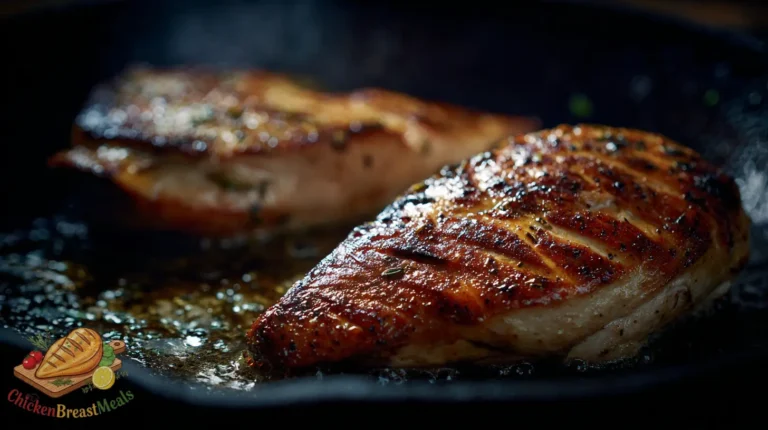
- Sear the chicken: Place chicken breasts presentation-side down in the hot skillet. Cook undisturbed for 5-6 minutes until deeply golden brown. Flip once and cook for an additional 4-5 minutes until internal temperature reaches 160°F (carryover cooking will bring it to 165°F).
- Remove and rest chicken: Transfer chicken to a plate and tent loosely with foil. Rest for a minimum of 5 minutes while preparing the sauce.
- Build the sauce base: Reduce heat to medium. Add remaining tablespoon of olive oil to the same skillet. Add diced shallots and sauté for 2 minutes until translucent but not browned. Add sliced garlic and red pepper flakes (if using) and cook for 30 seconds until fragrant.
- Deglaze: Add chicken stock or white wine, scraping the bottom of the pan with a wooden spoon to release fond (browned bits). Allow liquid to reduce by half, approximately 1-2 minutes.
- Add tomatoes: Add halved cherry tomatoes to the skillet. Cook for 3-4 minutes until they begin to soften and release juices. Gently press some tomatoes with the back of a spoon to release more liquid.
- Finish sauce: Add balsamic vinegar and simmer for 2 minutes until slightly reduced. Season with remaining ¼ teaspoon salt and ¼ teaspoon pepper. Turn heat to low.
- Mount with butter: Remove skillet from heat. Add cold butter cubes, swirling pan gently until butter is melted and sauce is glossy and slightly thickened.
- Add fresh basil: Stir in torn basil leaves, reserving some for garnish.
- Serve: Return chicken to the skillet to rewarm briefly. Spoon sauce over chicken and garnish with remaining fresh basil.
| Stage | Time | Visual Cue | Internal Temperature |
|---|---|---|---|
| Initial Sear (first side) | 5-6 minutes | Deep golden crust | N/A |
| Second Side | 4-5 minutes | Golden brown | 160°F |
| Rest Period | 5 minutes minimum | N/A | 165°F final |
| Sauce Development | 8-10 minutes | Glossy, slightly thickened | N/A |
Pro-Tips for Perfect Results
- Temperature Management: For proper Maillard reaction during searing, ensure your skillet reaches 425-450°F before adding chicken. A drop of water should instantly dance and evaporate when the pan is ready.
- Protein Preparation: Always equilibrate chicken to room temperature (30 minutes on counter) before cooking to ensure even heat distribution throughout the protein.
- Fond Development: Do not aggressively scrape the pan during initial chicken searing—those browned bits are flavor development in progress. Save deglazing for the sauce stage.
- Tomato Selection: Cherry or grape tomatoes have higher sugar-to-acid ratios than larger varieties, creating better caramelization and sauce development in the limited cooking window.
- Basil Timing: Add 75% of the basil off-heat to preserve volatile compounds, with the remaining 25% as raw garnish for aromatic complexity.
- Butter Mounting: Always use cold butter cubes for the final sauce enrichment. Room temperature butter will separate rather than emulsify properly into the sauce.
- Rest Period Utilization: The 5-minute chicken rest period is precisely calibrated to match sauce development time, allowing for perfect serving temperature synchronization.
Storage and Reheating
To preserve quality, store cooled chicken and sauce separately in airtight containers in the refrigerator for up to 3 days. The high acid content from tomatoes provides some natural preservation benefit but will continue to tenderize the protein during storage.
For reheating, bring chicken to room temperature for 15 minutes before proceeding. Heat sauce in a skillet over medium-low heat until it reaches 165°F, then add sliced chicken (cutting crosswise against the grain optimizes texture when reheating). Cover and warm for 2-3 minutes until chicken reaches 145°F.
Alternatively, for meal prep purposes, prepare the chicken and sauce separately, storing the uncooked sauce components (except basil) together. This allows for rapid assembly with optimal texture during busy weeknights.
Related Recipes to Try
Once you’ve mastered this technique, expand your skillet chicken repertoire with these complementary recipes that build on similar principles:
- Pesto Skillet Chicken Breast – Uses similar pan temperature management with herb-forward flavors
- Pan-Fried Boneless Chicken Breast Recipe – The foundational technique for all skillet chicken preparations
- Lemon Caper Skillet Chicken – Applies the same principles with bright, briny flavor notes
- Balsamic Glazed Skillet Chicken – Explores reduction techniques for sweeter sauce profiles
FAQs About Tomato Basil Skillet Chicken Breast
Why does my sauce separate instead of thickening properly?
Sauce separation typically occurs from excessive heat during the final stages. Always reduce heat to low or remove from burner entirely before mounting with cold butter. Additionally, ensure you’re not rushing the reduction phase—proper evaporation creates the concentration needed for sauce stability.
Can I use dried basil instead of fresh?
Fresh basil is strongly recommended as dried basil contains significantly different flavor compounds. If substitution is necessary, use 1 teaspoon dried basil added during the tomato cooking stage, but supplement with 1 teaspoon fresh parsley at the finish for aromatic freshness.
Why did my chicken turn out dry despite following the temperatures?
Protein quality matters significantly. Choose air-chilled chicken breasts which have 15-20% higher moisture retention than water-chilled alternatives. Additionally, ensure you’re not exceeding the specified searing time, as surface temperature can drive internal cooking faster than expected.
Can I make this recipe with cherry tomatoes and canned tomatoes?
For optimal results, use exclusively fresh cherry tomatoes. Canned tomatoes have already undergone heat processing, which alters their reduction behavior. If necessary, substitute half the fresh tomatoes with 3 tablespoons tomato paste added after the shallots have softened for concentrated flavor.
Is this recipe suitable for meal prep?
Yes, with modifications. For optimal results, prepare the chicken through the searing stage, cooling and refrigerating it separately. Prepare the sauce base through the shallot and garlic stage, cooling completely before refrigerating. When ready to serve, finish both components and assemble.
Conclusion
The technical excellence of this tomato basil skillet chicken breast lies in its precision-driven approach to both protein cookery and sauce development. By employing strategic temperature management and ingredient staging, this recipe transforms everyday ingredients into a cohesive, restaurant-quality dish.
The dual-phase cooking method—high-heat sear followed by gentle sauce development—ensures optimal moisture retention in the protein while maximizing flavor extraction from aromatics. What distinguishes superior results is attention to critical details: proper fond development, precise deglazing techniques, and careful management of heat-sensitive ingredients like basil.
For consistent success, focus on maintaining recommended temperature ranges during each phase and respecting the timing guidelines for ingredient additions. With practice, this technique-forward approach will become intuitive, allowing for creative variations while maintaining the core principles that ensure exceptional results.
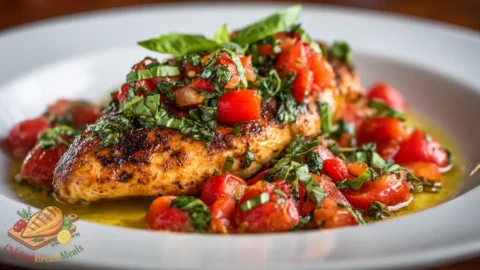
Tomato Basil Skillet Chicken Breast

Ingredients
- 2 boneless, skinless chicken breasts (6-8 oz each)
- 3 tablespoons extra virgin olive oil divided
- 1 teaspoon kosher salt
- 1/2 teaspoon freshly ground black pepper
- 1 medium shallot finely diced (about 1/4 cup)
- 3 garlic cloves thinly sliced
- 1/4 teaspoon red pepper flakes optional
- 1 1/2 cups cherry tomatoes halved
- 1/4 cup chicken stock or white wine
- 1 tablespoon balsamic vinegar
- 1/4 cup fresh basil leaves torn, plus additional for garnish
- 2 tablespoons cold unsalted butter cubed
Method
- Pat chicken breasts dry with paper towels. If uneven in thickness, place between plastic wrap and gently pound to an even 3/4-inch thickness. Season both sides with 3/4 teaspoon kosher salt and 1/4 teaspoon black pepper.
- Heat a 10-12 inch skillet over medium-high heat. Add 2 tablespoons olive oil and heat until shimmering but not smoking (approximately 350-375°F).
- Place chicken breasts presentation-side down in the hot skillet. Cook undisturbed for 5-6 minutes until deeply golden brown. Flip once and cook for an additional 4-5 minutes until internal temperature reaches 160°F.
- Transfer chicken to a plate and tent loosely with foil. Rest for a minimum of 5 minutes while preparing the sauce.
- Reduce heat to medium. Add remaining tablespoon of olive oil to the same skillet. Add diced shallots and sauté for 2 minutes until translucent but not browned. Add sliced garlic and red pepper flakes (if using) and cook for 30 seconds until fragrant.
- Add chicken stock or white wine, scraping the bottom of the pan with a wooden spoon to release fond (browned bits). Allow liquid to reduce by half, approximately 1-2 minutes.
- Add halved cherry tomatoes to the skillet. Cook for 3-4 minutes until they begin to soften and release juices. Gently press some tomatoes with the back of a spoon to release more liquid.
- Add balsamic vinegar and simmer for 2 minutes until slightly reduced. Season with remaining 1/4 teaspoon salt and 1/4 teaspoon pepper. Turn heat to low.
- Remove skillet from heat. Add cold butter cubes, swirling pan gently until butter is melted and sauce is glossy and slightly thickened.
- Stir in torn basil leaves, reserving some for garnish.
- Return chicken to the skillet to rewarm briefly. Spoon sauce over chicken and garnish with remaining fresh basil.
Note
- For proper Maillard reaction during searing, ensure your skillet reaches 425-450°F before adding chicken.
- Always equilibrate chicken to room temperature (30 minutes on counter) before cooking.
- Do not aggressively scrape the pan during initial chicken searing—those browned bits are flavor development.
- Cherry or grape tomatoes have higher sugar-to-acid ratios than larger varieties, creating better caramelization.
- Add 75% of the basil off-heat to preserve volatile compounds, with the remaining 25% as garnish.
- Always use cold butter cubes for the final sauce enrichment to ensure proper emulsification.