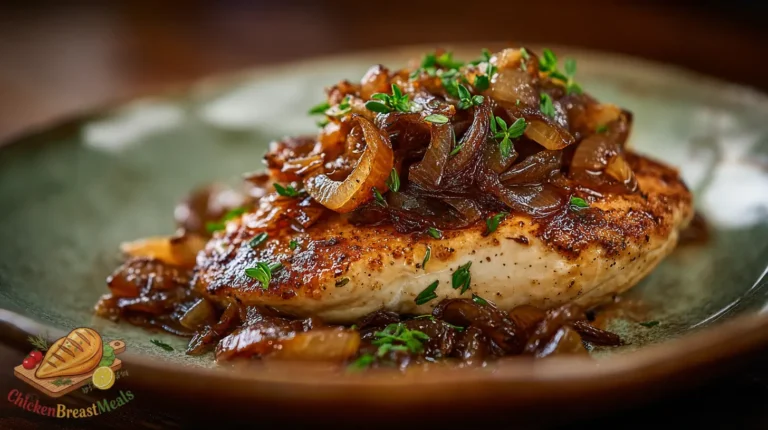
Fragrant Rosemary Garlic Skillet Chicken (Savory & Herb-Infused)

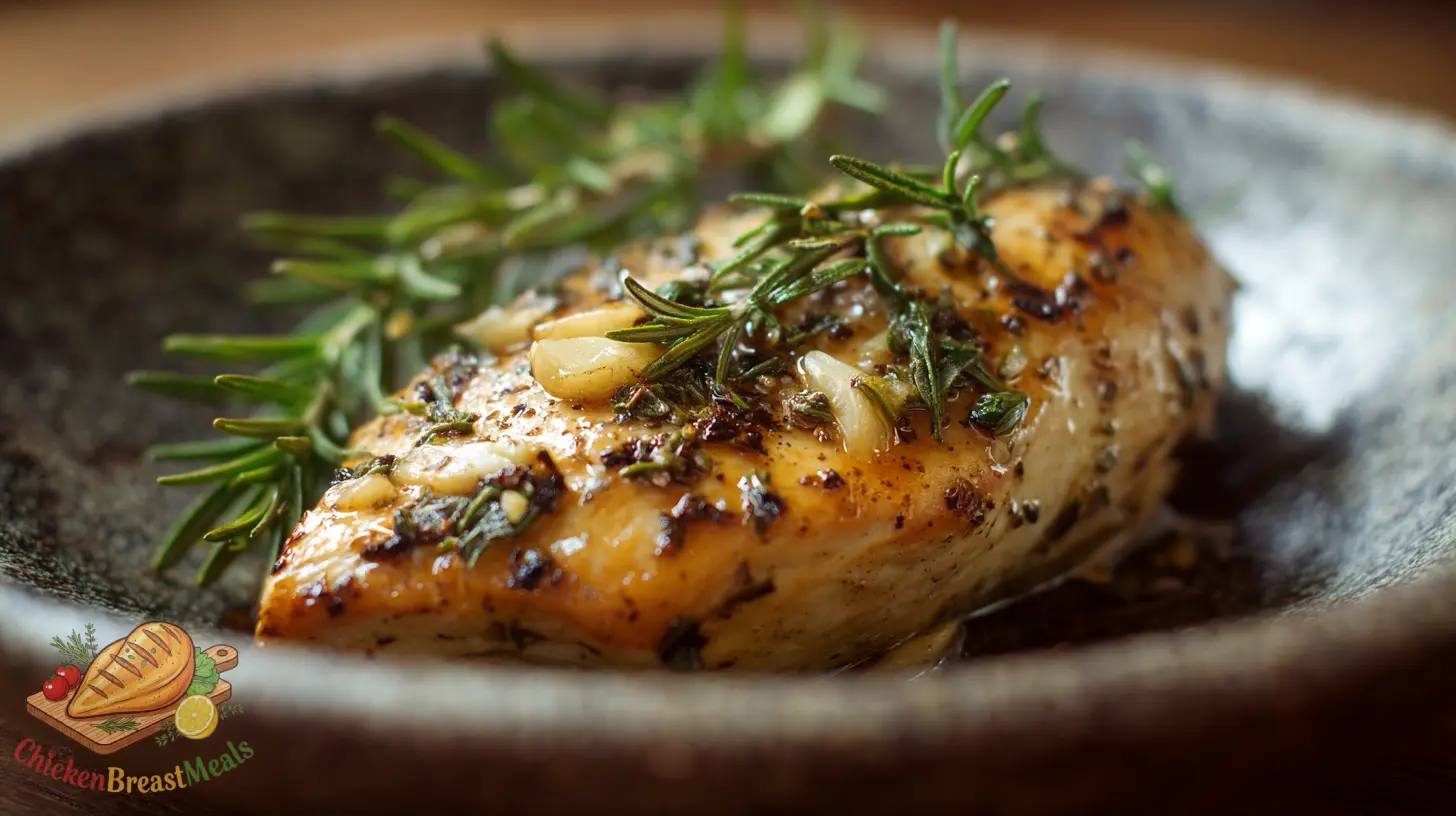
Rosemary garlic skillet chicken delivers exceptional flavor through a deceptively simple cooking method. What makes this technique stand apart is the perfect harmony between aromatic herbs and the Maillard reaction that develops in a properly heated skillet. However, many home cooks struggle with achieving restaurant-quality results, often ending up with either bland, rubbery chicken or burnt aromatics.
The critical challenges lie in temperature management and timing. Garlic burns quickly at high heat, while rosemary needs sufficient time to infuse its oils. Meanwhile, chicken breast requires precise cooking to remain juicy. This recipe solves these competing requirements through a tested technical approach that delivers consistently outstanding results.
Test-Kitchen Executive Summary
This rosemary garlic skillet chicken employs a dual-heat approach with cold-pan chicken placement to maximize browning while minimizing moisture loss. Fresh rosemary is incorporated at two stages—first in a brief marinade for surface infusion, then as whole sprigs during cooking for aromatic steam. Garlic is added strategically after initial searing to prevent burning while still developing complex flavor compounds. Chicken is removed at precisely 165°F (74°C) and rested under foil to allow protein relaxation and juice redistribution.
The Science of Success: Why This Recipe Works
Technical Foundations
The success of this recipe hinges on understanding protein behavior and flavor development. Chicken breast is approximately 75% water, 22% protein, and 3% fat. When heat is applied, proteins denature and contract, potentially squeezing out moisture. Our method counteracts this through strategic temperature management and proper resting time. Additionally, the combination of rosemary’s aromatic compounds (primarily 1,8-cineole and alpha-pinene) with garlic’s allicin creates a synergistic flavor profile that penetrates the meat. This approach builds upon principles covered in our comprehensive pan-fried chicken breast guide, but with specific modifications for herb infusion.
The skillet choice matters significantly—cast iron provides superior heat retention and distribution, creating the perfect environment for Maillard browning. This controlled browning produces hundreds of new flavor compounds that provide depth while a partial fond develops, which is later deglazed to capture all flavor components.
Ingredients and Essential Tools
For the Chicken
- 2 boneless, skinless chicken breasts (8-10 oz each), pounded to even 3/4″ thickness
- 1 tablespoon extra virgin olive oil
- 1 tablespoon unsalted butter
- 4 fresh rosemary sprigs (3-4″ in length)
- 6 garlic cloves, 3 minced and 3 whole but lightly crushed
- 1/2 teaspoon kosher salt
- 1/4 teaspoon freshly ground black pepper
- 2 tablespoons chicken stock or white wine (for deglazing)
Essential Equipment
- 10-12″ cast iron skillet (preferred) or heavy-bottomed stainless steel pan
- Meat thermometer (instant-read preferred)
- Tongs for flipping chicken
- Heavy meat pounder or rolling pin
- Aluminum foil for tenting
Step-by-Step Instructions
- Prepare the Chicken: Place chicken breasts between two sheets of plastic wrap and pound to an even 3/4″ thickness. This ensures uniform cooking. Pat dry thoroughly with paper towels to remove surface moisture—this is essential for proper browning.
- Season and Pre-Infuse: In a shallow dish, combine 1 tablespoon olive oil, 1 teaspoon finely chopped rosemary (from one sprig), 3 minced garlic cloves, salt, and pepper. Coat chicken evenly and allow to rest at room temperature for 20-30 minutes. This brief marinade provides surface flavor without the acidity that would begin breaking down proteins.
- Prepare the Skillet: Place your cast iron skillet on medium-low heat and allow it to heat gradually for 5 minutes. This slow preheating ensures even temperature distribution throughout the heavy pan.
- Begin Cooking Process: Increase heat to medium-high. Add butter and allow it to melt and begin foaming but not browning. Immediately place chicken breasts presentation-side down in the pan. The initial sizzle should be moderate—not violent, which indicates too high heat, nor quiet, which means too low.
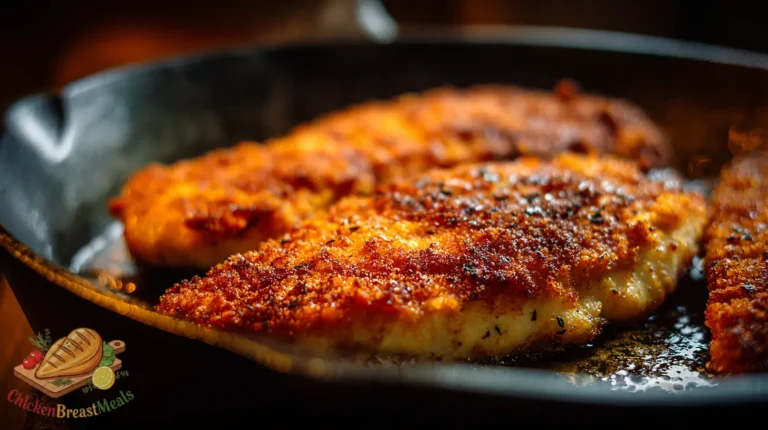
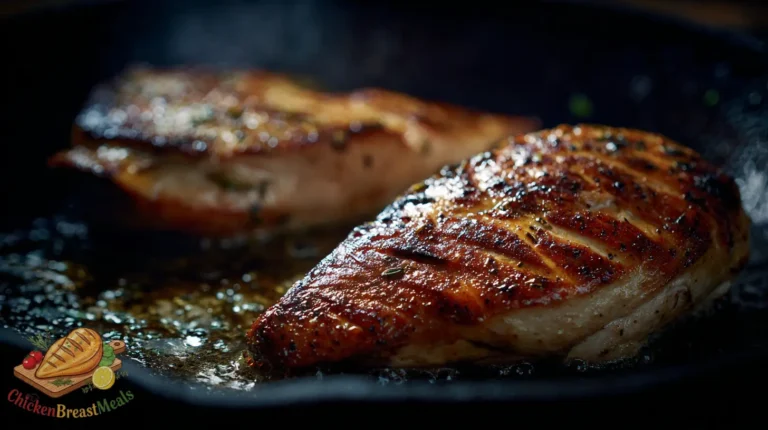
- First-Side Searing: Cook undisturbed for 5-6 minutes until a golden-brown crust forms. Resist the urge to move or check the chicken prematurely as this interrupts crust formation.
- Flip and Add Aromatics: Turn chicken using tongs (not a fork which would puncture and release juices). Add remaining whole rosemary sprigs and lightly crushed garlic cloves around (not on) the chicken. Reduce heat to medium.
- Finish Cooking: Cook for an additional 5-7 minutes, occasionally tilting the pan and basting the chicken with the infused butter-oil mixture. The aromatics will perfume the cooking fat and steam, creating layered flavor.
- Temperature Check: Use an instant-read thermometer to verify chicken has reached 165°F (74°C) at its thickest point. If needed, cook for additional 1-minute increments, checking temperature between each.
- Rest the Chicken: Transfer chicken to a plate and tent loosely with foil. Allow to rest for 5 minutes, during which carryover cooking will continue and proteins will relax, reabsorbing juices.
- Create Pan Sauce: While chicken rests, add 2 tablespoons stock or wine to the skillet, scraping up browned bits. Allow to reduce by half, then drizzle over chicken before serving.
| Step | Time | Visual Cue | Technical Note |
|---|---|---|---|
| Initial Sear | 5-6 min | Golden-brown crust | Maillard reaction occurs between 285-330°F |
| Second Side | 5-7 min | Firm to touch | Internal proteins coagulating |
| Rest Period | 5 min | Slight carryover rise | Myosin protein relaxation phase |
| Pan Sauce | 1-2 min | Thickened slightly | Reduction to concentrate flavors |
Pro-Tips for Perfect Results
- Temperature Gradient: Allow chicken to sit at room temperature for 20 minutes before cooking. Cold protein straight from the refrigerator creates an extreme temperature differential that leads to uneven cooking.
- Rosemary Selection: Use fresh rosemary with pliable, not woody stems. Fresh herbs contain volatile oils that dissipate during cooking, creating aromatic compounds that dry herbs cannot replicate.
- Chicken Thickness: The 3/4″ thickness specification is critical—thinner cuts will overcook, while thicker portions won’t allow proper heat penetration relative to surface browning time.
- Pan Selection: Cast iron’s thermal mass creates consistent heat, eliminating hot spots. If using stainless steel, increase preheating time to compensate for lower heat retention.
- Oil-Butter Combination: The olive oil raises the smoke point of butter while allowing butter’s milk solids to contribute flavor through light browning. This prevents bitter burned flavors.
- Sound Indicators: Listen to your cooking. The sizzle should be consistent. If it becomes quiet, your pan is too cool; if it’s crackling loudly, heat is too high.
- Garlic Timing: Adding crushed garlic only after flipping prevents burning. Whole crushed cloves release flavor without becoming bitter, while the pre-minced garlic in the marinade provides baseline notes.
Storage and Reheating
This rosemary garlic skillet chicken can be stored properly to maintain quality for later consumption. After cooking, allow chicken to cool completely before refrigerating to prevent condensation that would make the surface soggy. Store in an airtight container for up to 3 days in the refrigerator.
For optimal reheating, avoid microwave methods which toughen proteins and create uneven hot spots. Instead:
- Preheat oven to 325°F (165°C)
- Place chicken in an oven-safe dish with 1 tablespoon water or chicken stock
- Cover tightly with foil to create a steam environment
- Heat for 10-15 minutes until internal temperature reaches 130-140°F (54-60°C)
If you need to freeze portions, wrap individual pieces tightly in plastic wrap, then aluminum foil, before placing in a freezer bag. Consume within 2 months and thaw overnight in the refrigerator before reheating using the method above.
Related Recipes to Try
- Garlic Butter Skillet Chicken Breast – A more intensely buttery variation with a different herb profile that emphasizes garlic as the primary flavor component
- Cast Iron Skillet Chicken Breast – Master the fundamental techniques of perfect cast iron cooking with this versatile base recipe
- Lemon Thyme Skillet Chicken – Replace rosemary with thyme and add lemon zest for a brighter, citrus-forward variation
- Mediterranean Skillet Chicken – Incorporate sun-dried tomatoes, olives and a touch of balsamic with the rosemary-garlic base
FAQs About Rosemary Garlic Skillet Chicken
Why does my garlic always burn in the skillet?
Garlic contains high sugar content that burns at temperatures above 350°F (177°C). Our two-stage approach solves this: minced garlic in the marinade infuses flavor before cooking, while adding whole crushed cloves only after flipping the chicken keeps them from direct high-heat contact while still flavoring the dish.
Can I use dried rosemary instead of fresh?
While possible, it’s not recommended. Dried rosemary has lost 60-70% of its volatile oils and has a woody, sometimes dusty texture. If you must use dried, reduce quantity to 1 teaspoon total and rehydrate it first in 1 tablespoon warm olive oil for 10 minutes before incorporating.
Why is my chicken always dry despite following cooking times?
Cooking times are guidelines, not rules. Variables including actual thickness, starting temperature, and pan material affect cooking speed. The only reliable method is cooking to temperature (165°F/74°C) rather than time. Invest in a quality instant-read thermometer for consistently juicy results.
Is it necessary to pound the chicken to even thickness?
Yes. Natural chicken breasts vary by up to 1/2″ in thickness between the thicker and thinner ends. Without pounding, the thin part overcooks while the thick part reaches proper temperature, resulting in partially dry meat. Even thickness ensures uniform doneness.
Can I make this recipe with chicken thighs instead?
Yes, bone-in thighs require approximately 7-8 minutes per side and should reach 175°F (79°C) for optimal texture. Boneless thighs need about 5-6 minutes per side. The higher fat content in thighs makes them more forgiving but produces a different flavor profile.
Conclusion
Rosemary garlic skillet chicken represents the intersection of simple ingredients and technical precision. The dual application of aromatics—first in a brief marinade, then as infusion during cooking—creates depth impossible to achieve through single-stage flavoring. The careful temperature management and resting protocol ensure protein integrity while maximizing moisture retention.
What distinguishes this preparation from similar recipes is the methodical approach to timing each element. By introducing garlic at the precise moment when it can flavor the dish without burning, and by using rosemary’s volatile oils to create an aromatic steam environment, we’ve elevated a straightforward protein into a technically sophisticated dish. Master this technique, and you’ll gain fundamental skills applicable across numerous chicken preparations—proving that technical precision, rather than exotic ingredients, is often the key to exceptional cooking.
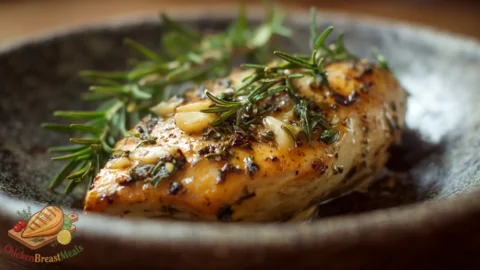
Rosemary Garlic Skillet Chicken

Ingredients
- 2 boneless, skinless chicken breasts (8-10 oz each) pounded to even 3/4″ thickness
- 1 tablespoon extra virgin olive oil
- 1 tablespoon unsalted butter
- 4 sprigs fresh rosemary 3-4″ in length
- 6 cloves garlic 3 minced, 3 whole but lightly crushed
- 1/2 teaspoon kosher salt
- 1/4 teaspoon freshly ground black pepper
- 2 tablespoons chicken stock or white wine for deglazing
Method
- Place chicken breasts between two sheets of plastic wrap and pound to an even 3/4″ thickness. Pat dry thoroughly with paper towels.
- In a shallow dish, combine olive oil, 1 teaspoon finely chopped rosemary (from one sprig), 3 minced garlic cloves, salt, and pepper. Coat chicken evenly and allow to rest at room temperature for 20-30 minutes.
- Place cast iron skillet on medium-low heat and allow it to heat gradually for 5 minutes.
- Increase heat to medium-high. Add butter and allow it to melt and begin foaming. Immediately place chicken breasts presentation-side down in the pan.
- Cook undisturbed for 5-6 minutes until a golden-brown crust forms.
- Turn chicken using tongs. Add remaining whole rosemary sprigs and lightly crushed garlic cloves around the chicken. Reduce heat to medium.
- Cook for an additional 5-7 minutes, occasionally tilting the pan and basting the chicken with the infused butter-oil mixture.
- Use an instant-read thermometer to verify chicken has reached 165°F (74°C) at its thickest point.
- Transfer chicken to a plate and tent loosely with foil. Allow to rest for 5 minutes.
- While chicken rests, add 2 tablespoons stock or wine to the skillet, scraping up browned bits. Allow to reduce by half, then drizzle over chicken before serving.