Classic Buttermilk Chicken Marinade (Juicy & Flavorful)

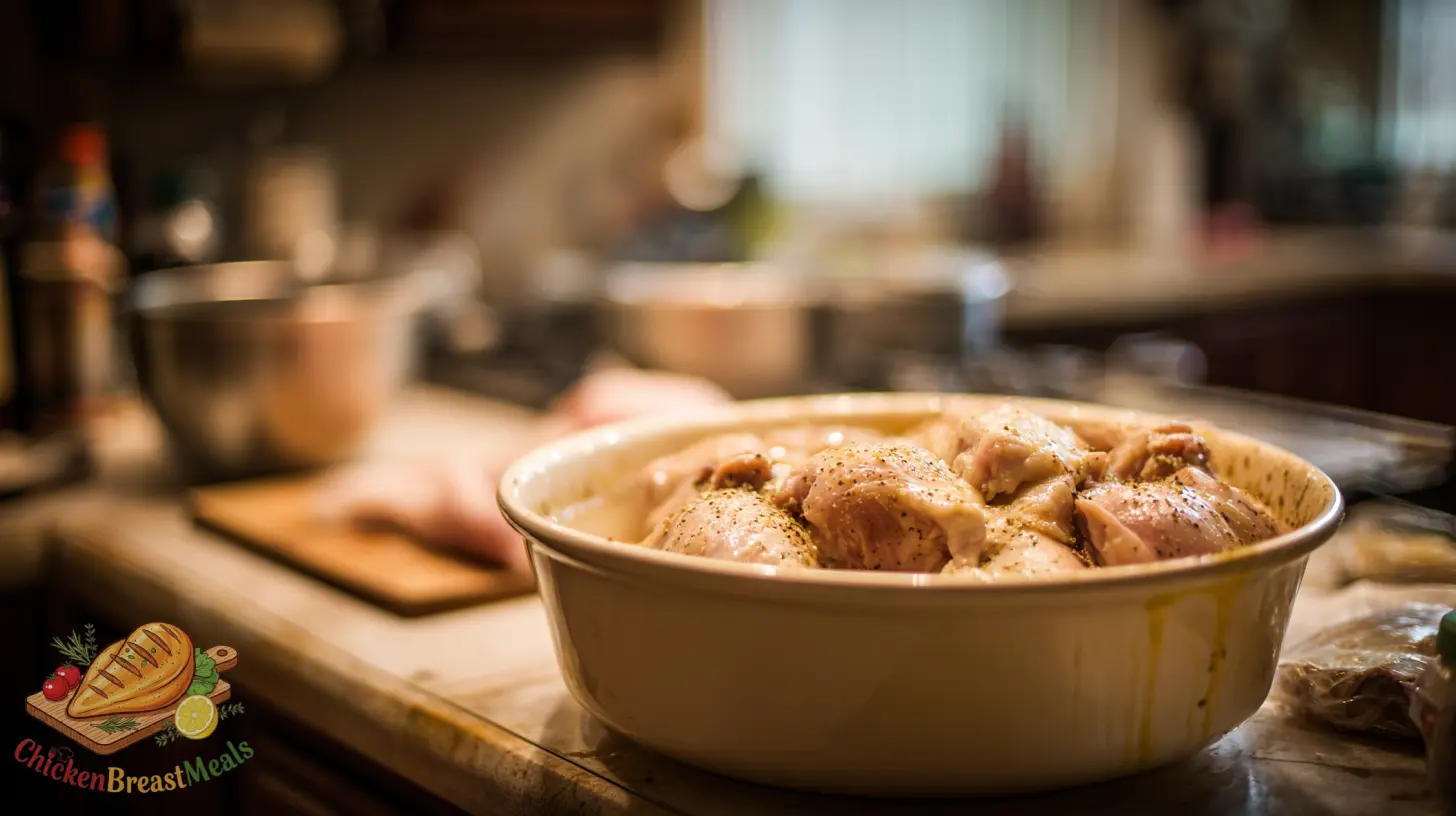
Buttermilk chicken marinade represents one of the most effective techniques for transforming ordinary chicken into extraordinarily tender, flavorful meat. This traditional preparation method leverages the natural acidity of cultured buttermilk to break down muscle fibers while imparting a subtle tanginess that creates depth of flavor.
Many home cooks struggle with dry, bland chicken—a common culinary frustration. The correct application of a buttermilk marinade addresses both issues simultaneously through enzymatic action and flavor infusion, creating chicken that remains moist during cooking while developing complex flavor notes.
Test-Kitchen Executive Summary
Our buttermilk chicken marinade employs a 2:1 ratio of buttermilk to complementary ingredients (herbs, spices, salt), optimally functioning through 4-24 hours of refrigerated contact time. The marinade’s lactic acid content denatures proteins while its calcium activates natural enzymes, simultaneously tenderizing and flavoring chicken tissue. Maximum efficiency occurs with butterflied or thin-cut chicken pieces below 40°F/4°C.
The Science of Success: Why This Recipe Works
Technical Foundations
Buttermilk’s effectiveness as a marinade stems from its unique composition. With a pH between 4.4-4.8, it’s mildly acidic—strong enough to denature proteins but gentle enough to prevent the “mushy” exterior that stronger acids like lemon juice or vinegar can create. The calcium content in buttermilk also activates calpains, natural meat-tenderizing enzymes already present in chicken, as we explain in our comprehensive guide to marinated chicken breast techniques.
Furthermore, buttermilk’s viscosity ensures excellent adhesion to meat surfaces, facilitating both flavor transfer and consistent moisture retention. The milk proteins form a protective barrier during cooking that slows moisture loss, while simultaneously providing a foundation for exceptional browning through Maillard reaction enhancement.
Flavor Development Mechanisms
Unlike simple acidic marinades, buttermilk contributes a complex flavor profile through its cultured dairy notes. These compounds penetrate approximately 1-2mm into the meat, creating a flavorful gradient from exterior to interior. When combined with aromatic herbs and spices, buttermilk acts as a flavor carrier, dissolving fat-soluble flavor compounds and transferring them to the chicken’s surface.
Ingredients and Essential Tools
Primary Ingredients
- 2 cups full-fat buttermilk (cultured, not the acidified milk substitute)
- 2 teaspoons kosher salt (provides greater surface area than table salt)
- 1 tablespoon garlic powder (not garlic salt)
- 1 teaspoon onion powder
- 1 teaspoon paprika (sweet Hungarian preferred)
- ½ teaspoon freshly ground black pepper
- ½ teaspoon dried thyme
- ¼ teaspoon cayenne pepper (optional for heat)
- 2 tablespoons neutral oil (enhances moisture retention)
- 2 pounds chicken breast (works with whole, halved, or butterflied)
Optional Flavor Enhancements
- 1 tablespoon honey or maple syrup (promotes browning)
- 1 teaspoon mustard powder
- 1 tablespoon hot sauce (Frank’s or Tabasco)
- Zest of one lemon (adds brightness)
Essential Tools
- Glass or food-grade plastic container (non-reactive)
- Whisk
- Measuring cups and spoons
- Gallon-sized zip-top bags (alternative container method)
- Digital kitchen thermometer
Step-by-Step Instructions
- Prepare the chicken: Trim excess fat. For even marination, butterfly thick breasts or use a meat mallet to create uniform thickness (approximately ¾-inch).
- Create the marinade base: In a large bowl, whisk the buttermilk and salt until the salt begins to dissolve. The dissolved salt creates a mild brine effect within the marinade.
- Add dry components: Whisk in garlic powder, onion powder, paprika, black pepper, thyme, and cayenne (if using). Ensure even distribution with no clumping.
- Incorporate oil: Slowly drizzle in oil while whisking continuously to create a light emulsion. This helps flavor compounds adhere to the chicken surface.
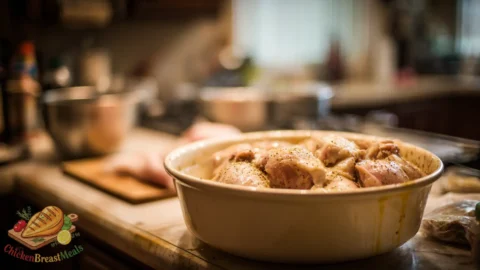
- Combine chicken and marinade: Place chicken pieces in a container or zip-top bag. Pour marinade over chicken, ensuring all surfaces make contact with the liquid. Massage gently to distribute marinade.
- Refrigerate: Seal container and refrigerate. Turn chicken halfway through marination time if not fully submerged.
- Remove and prepare for cooking: Remove chicken from marinade, allowing excess to drip off. Do not rinse. Pat very gently with paper towels to remove excess surface moisture for better browning.
| Chicken Cut | Minimum Time | Optimal Time | Maximum Time |
|---|---|---|---|
| Whole Breasts | 4 hours | 8 hours | 24 hours |
| Butterflied/Thin-cut | 2 hours | 6 hours | 12 hours |
| Cubed (1-inch) | 1 hour | 4 hours | 8 hours |
Pro-Tips for Perfect Results
- Temperature control: Maintain marinade temperature between 34-38°F for food safety while optimizing enzyme activity. Higher temperatures increase enzyme activity but introduce food safety risks.
- Surface area optimization: Score thicker pieces of chicken with shallow diagonal cuts (1/8-inch deep) in a crosshatch pattern to increase marinade penetration.
- Fat content matters: Full-fat buttermilk (not low-fat) provides superior results due to enhanced flavor compound solubility and improved texture development.
- Pre-salting technique: For maximum tenderness, dry-brine chicken with salt 30 minutes before applying buttermilk marinade. This activates endogenous enzymes earlier in the process.
- Avoid metal containers: The acidity in buttermilk can react with aluminum or copper, imparting metallic flavors. Use glass, ceramic, or food-grade plastic.
- Remove chill before cooking: Allow marinated chicken to stand at room temperature for 20-30 minutes before cooking to ensure even heat penetration and reduce cooking time.
- Cooking surface preparation: Use higher heat than normal (medium-high instead of medium) to counteract the additional moisture from the marinade and achieve proper browning.
Storage and Reheating
Marinated Raw Chicken Storage
Chicken in buttermilk marinade can be refrigerated for up to 24 hours in an airtight container. For longer preservation, transfer the chicken and marinade to a freezer-safe container or heavy-duty freezer bag, removing as much air as possible. Frozen marinated chicken can be stored for up to 3 months, with the marinade continuing to tenderize (albeit slowly) even while frozen.
Cooked Chicken Storage
After cooking, buttermilk-marinated chicken can be refrigerated for 3-4 days in an airtight container. For best quality, separate pieces with parchment paper to prevent moisture migration between pieces.
Reheating Methods
Buttermilk-marinated chicken maintains moisture better than unmarinated chicken during reheating. For optimal results:
- Oven method: Preheat to 325°F. Place chicken on a wire rack over a baking sheet, add 1 tablespoon of water to the sheet (creating steam), and cover loosely with foil. Heat until internal temperature reaches 165°F (approximately 10-15 minutes).
- Sous vide method: Reheat in a water bath at 140°F for 20-30 minutes (vacuum-sealed).
- Microwave method (emergency only): Cover with a damp paper towel and heat at 60% power in 30-second intervals until warmed through.
Related Recipes to Try
- Alternative dairy marinades: For similar tenderizing effects with different flavor profiles, try our Greek yogurt chicken marinade which offers higher protein content and a Mediterranean flavor profile.
- Non-dairy option: Our soy-ginger chicken marinade provides excellent tenderization through enzymatic action without dairy components.
- Buttermilk-brined whole chicken: Apply this marinade technique to a whole chicken for an exceptional Sunday roast.
- Nashville hot chicken: Use this buttermilk marinade as the foundation for authentic Nashville hot chicken by adding additional spices and a post-cooking spiced oil bath.
FAQs About Buttermilk Chicken Marinade
Can I make a buttermilk substitute if I don’t have real buttermilk?
Yes, but with reduced effectiveness. Add 1 tablespoon of lemon juice or white vinegar to 1 cup of whole milk and let stand 5-10 minutes. This creates acidity but lacks the cultured flavor compounds and calcium content of true buttermilk. For better results, use kefir as an alternative.
How does buttermilk marinade differ from a standard brine?
While both improve moisture retention, buttermilk marinades tenderize through mild acid denaturation and enzyme activation, whereas brines work through osmosis and protein alteration. Buttermilk also contributes flavor compounds absent in basic salt-water brines.
Why does my buttermilk-marinated chicken sometimes turn out tough?
Over-marination (beyond 24 hours) can cause excessive protein breakdown, resulting in mushy exteriors but potentially tougher interiors. Also, acidic marinades can mask doneness indicators, leading to overcooking. Use a digital thermometer for accurate temperature measurement.
Can buttermilk marinade be used with other meats?
Yes, though effectiveness varies. It works well with pork and turkey, moderately well with lamb, but is less effective with beef due to different muscle fiber composition. Adjust marination times: less for fish (30-60 minutes) and more for pork (up to 12 hours).
Is it safe to use the leftover marinade as a sauce?
Not without further processing. Buttermilk marinade that has contacted raw chicken contains potential pathogens. If desired for sauce, reserve a portion before adding chicken, or boil used marinade for at least 2 minutes to reach food-safe temperatures.
Conclusion
Buttermilk chicken marinade represents a perfect intersection of culinary tradition and food science. By harnessing the mild acidity, enzyme activation properties, and flavor-carrying capabilities of cultured buttermilk, this technique transforms ordinary chicken into remarkably tender, flavorful results with minimal active preparation time.
The key technical aspects—maintaining optimal pH levels between 4.4-4.8, leveraging calcium-activated enzymatic action, and controlling temperature during the marination process—create consistent, repeatable results that elevate chicken breast from potentially bland and dry to consistently juicy and flavorful.
For optimal results, remember that time management is critical: too short a marination fails to achieve full tenderization, while too long can compromise textural integrity. The ideal 8-12 hour window for whole chicken breasts balances these factors perfectly, making this method ideal for overnight preparation.
Classic Buttermilk Chicken Marinade

Ingredients
- 2 cups full-fat buttermilk cultured, not acidified milk substitute
- 2 teaspoons kosher salt
- 1 tablespoon garlic powder not garlic salt
- 1 teaspoon onion powder
- 1 teaspoon paprika sweet Hungarian preferred
- 1/2 teaspoon freshly ground black pepper
- 1/2 teaspoon dried thyme
- 1/4 teaspoon cayenne pepper optional for heat
- 2 tablespoons neutral oil such as canola or grapeseed
- 2 pounds chicken breast whole, halved, or butterflied
Method
- Prepare the chicken: Trim excess fat. For even marination, butterfly thick breasts or use a meat mallet to create uniform thickness (approximately ¾-inch).
- Create the marinade base: In a large bowl, whisk the buttermilk and salt until the salt begins to dissolve.
- Add dry components: Whisk in garlic powder, onion powder, paprika, black pepper, thyme, and cayenne (if using). Ensure even distribution with no clumping.
- Incorporate oil: Slowly drizzle in oil while whisking continuously to create a light emulsion.
- Combine chicken and marinade: Place chicken pieces in a container or zip-top bag. Pour marinade over chicken, ensuring all surfaces make contact with the liquid. Massage gently to distribute marinade.
- Refrigerate: Seal container and refrigerate. For whole chicken breasts, marinate 4-24 hours (8 hours optimal). Turn chicken halfway through if not fully submerged.
- Remove and prepare for cooking: Remove chicken from marinade, allowing excess to drip off. Do not rinse. Pat very gently with paper towels to remove excess surface moisture for better browning.
Note
- For maximum tenderness, dry-brine chicken with salt 30 minutes before applying buttermilk marinade.
- Full-fat buttermilk provides superior results compared to low-fat versions.
- Maintain marinade temperature between 34-38°F for food safety while optimizing enzyme activity.
- Score thicker pieces with shallow diagonal cuts to increase marinade penetration.
- Allow marinated chicken to stand at room temperature for 20-30 minutes before cooking.