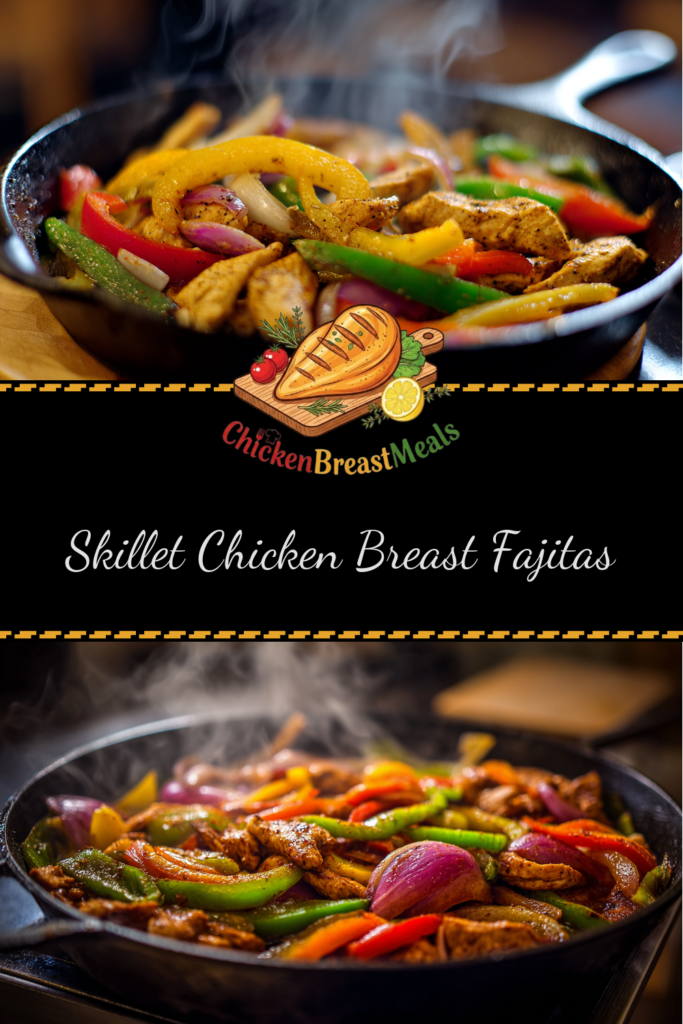
Skillet Chicken Breast Fajitas

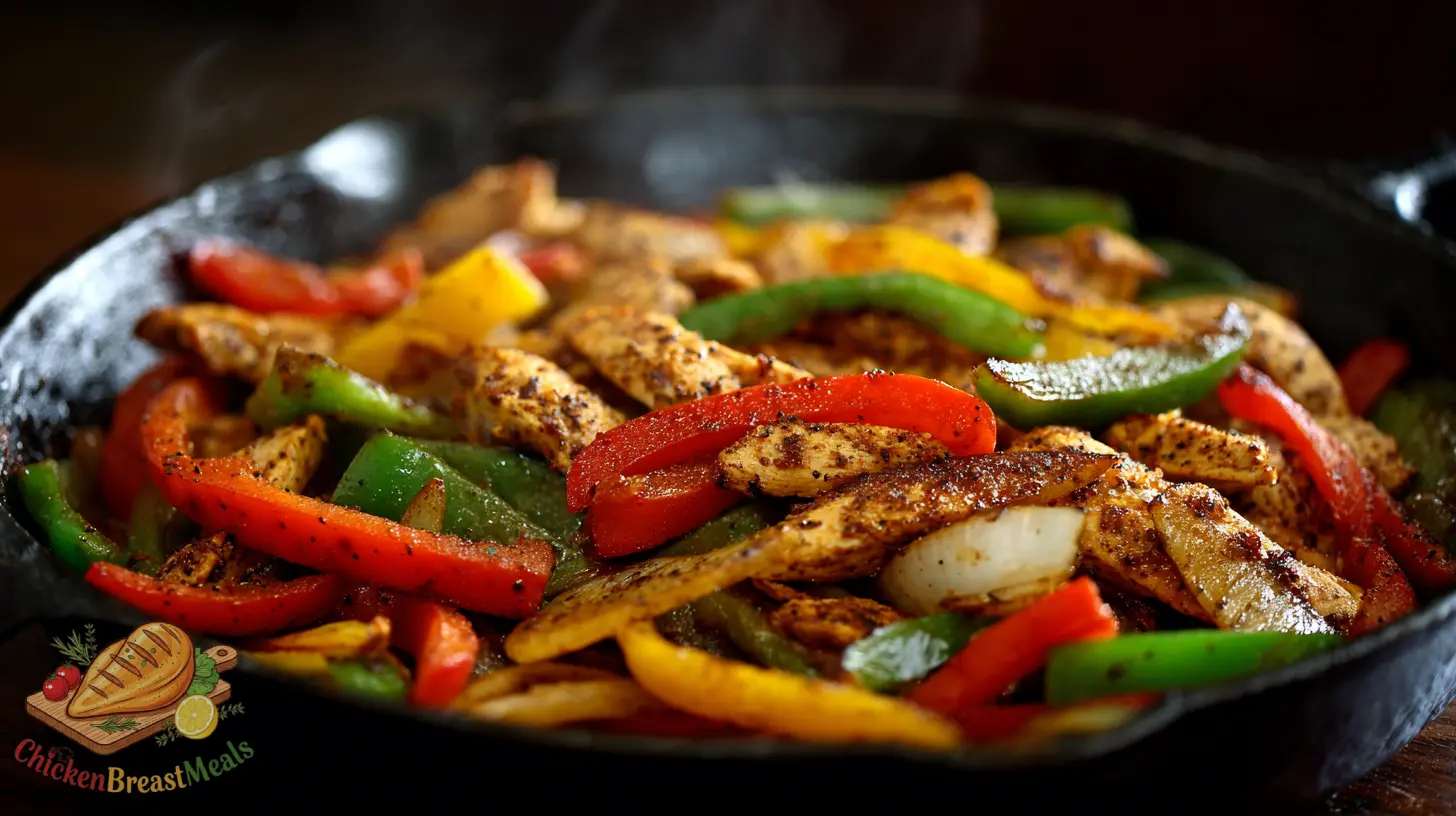
Skillet chicken breast fajitas represent the perfect intersection of convenience and culinary excellence. This one-pan wonder transforms simple ingredients into a vibrant, restaurant-quality meal with minimal effort. Achieving the ideal balance of charred vegetables and perfectly cooked chicken requires precision in both preparation and execution.
The technical challenge lies in maintaining the proper temperature gradient throughout cooking—too hot and your peppers burn before the chicken cooks; too cool and you’ll never develop the characteristic fajita char. This guide addresses these challenges through methodical technique and science-based approaches to ensure consistent results.
Test-Kitchen Executive Summary
Our skillet chicken breast fajitas recipe achieves optimal results through controlled high-heat cooking in a cast iron or carbon steel pan, achieving Maillard reaction temperatures between 350-400°F. Chicken breasts are sliced against the grain at ¼-inch thickness and marinated with lime juice (pH 2.4) for 30 minutes to promote tenderness. The sequential cooking method—first chicken, then vegetables, then recombining—ensures proper doneness for each component while maintaining textural integrity.
The Science of Success: Why This Recipe Works
Technical Foundations
The success of skillet chicken breast fajitas depends primarily on three scientific principles: proper heat management, moisture control, and protein preparation. A pre-heated skillet creates the immediate Maillard reaction necessary for developing complex flavors in both the chicken and vegetables. We’ve found that maintaining the pan at 375-400°F optimizes browning without risking protein desiccation—a common issue when cooking sliced chicken breast as explored in our comprehensive pan-fried chicken breast guide.
The marinade serves dual purposes: first, the acidic components (lime juice) partially denature proteins, creating channels for flavor absorption; second, salt-soluble proteins extract to the surface, promoting better browning and moisture retention during high-heat cooking. This technical approach ensures chicken remains tender while developing the characteristic fajita char.
Ingredients and Essential Tools
For the Chicken and Marinade:
- 1.5 pounds boneless, skinless chicken breasts (approximately 3 medium breasts)
- 3 tablespoons fresh lime juice (pH 2.4)
- 2 tablespoons avocado oil (smoke point: 520°F)
- 1 tablespoon ground cumin
- 2 teaspoons chili powder
- 1 teaspoon smoked paprika
- 1 teaspoon dried oregano (preferably Mexican)
- 1.5 teaspoons kosher salt (1.5% by weight of chicken)
- ½ teaspoon black pepper, freshly ground
For the Vegetables:
- 1 large red bell pepper, sliced into ¼-inch strips
- 1 large yellow bell pepper, sliced into ¼-inch strips
- 1 large green bell pepper, sliced into ¼-inch strips
- 1 large white or yellow onion, sliced into ¼-inch half-moons
- 3 cloves garlic, minced (approximately 1 tablespoon)
- 1 tablespoon avocado oil
- ½ teaspoon kosher salt
For Serving:
- 8-10 (6-inch) flour tortillas
- Lime wedges
- Fresh cilantro, chopped
- Avocado slices or guacamole
- Sour cream
- Pico de gallo or salsa
Essential Equipment:
- 12-inch cast iron skillet or carbon steel pan (preferred for heat retention)
- Sharp chef’s knife
- Cutting board
- Mixing bowls for marinade and prepared vegetables
- Meat thermometer (recommended)
- Tongs for handling hot ingredients
- Timer
Step-by-Step Instructions
- Prepare the Chicken: Slice chicken breasts against the grain into ¼-inch thick strips. For even cooking, ensure strips are uniform in thickness and approximately 2-3 inches in length. Slicing against the grain shortens muscle fibers, resulting in more tender bites.
- Marinate the Chicken: In a medium bowl, combine lime juice, 2 tablespoons avocado oil, cumin, chili powder, smoked paprika, oregano, 1.5 teaspoons salt, and black pepper. Add sliced chicken and toss to coat thoroughly. Allow to marinate for 30 minutes at room temperature, or up to 4 hours refrigerated. Extended marination beyond 4 hours can result in mushy texture due to acid denaturing proteins.
- Prepare the Vegetables: While chicken marinates, slice bell peppers and onions into uniform ¼-inch strips. Mince garlic and set aside separately from other vegetables (it will be added later to prevent burning).
- Heat the Skillet: Place cast iron skillet over medium-high heat and allow to preheat for 5 minutes until surface temperature reaches approximately 375-400°F. Proper preheating is essential for creating the characteristic fajita sear while preventing sticking.
- Cook the Chicken: Using tongs, remove chicken from marinade, allowing excess to drip off. The pan should be hot enough that chicken sizzles immediately upon contact. Place chicken strips in a single layer (work in batches if necessary to avoid overcrowding). Cook undisturbed for 2-3 minutes until browned on first side, then flip and cook additional 1-2 minutes until internal temperature reaches 165°F. Remove to a clean plate and tent loosely with foil.
- Cook the Vegetables: In the same skillet, add 1 tablespoon avocado oil. Add sliced peppers and onions, sprinkle with remaining salt, and cook over medium-high heat for 4-5 minutes, stirring occasionally. Vegetables should soften slightly while maintaining some crispness and developing char marks. Add minced garlic during the final 30 seconds of cooking.
- Combine and Serve: Return cooked chicken to skillet with vegetables, including any accumulated juices. Toss gently to combine and heat through for 1 minute. Remove from heat.
- Warm Tortillas: While skillet is still hot, push mixture to one side and warm tortillas one at a time for 10-15 seconds per side. Alternatively, warm tortillas in a separate dry skillet or wrapped in foil in a 350°F oven for 5 minutes.
- Assemble and Serve: Serve immediately with warm tortillas and desired accompaniments.
| Stage | Time | Temperature | Visual Indicator |
|---|---|---|---|
| Marinating | 30 min (ideal) – 4 hours (max) | Room temp or refrigerated | Chicken slightly firmer, takes on spice color |
| Skillet Preheating | 5 minutes | 375-400°F | Pan appears to shimmer, water droplets dance |
| Chicken Cooking | 3-5 minutes total | Med-high (first side); Medium (second side) | Golden brown exterior, 165°F internal |
| Vegetable Cooking | 4-5 minutes | Medium-high | Slight char, semi-softened with remaining bite |
| Final Combination | 1 minute | Medium | Proteins and vegetables fully integrated |
Pro-Tips for Perfect Results
- Temperature Management: The ideal skillet temperature ranges between 375-400°F. Too cool, and you won’t develop proper charring; too hot, and the exterior of your chicken will burn before the interior cooks through. An infrared thermometer provides precise measurement.
- Protein Pattern: When cooking chicken in batches, arrange strips in the pan in a spoke pattern from center to edge. This technique maximizes surface contact while creating temperature gradients that accommodate varying thicknesses.
- Slicing Technique: For optimal tenderness, identify the direction of muscle fibers in the chicken breast and cut perpendicular to them. A 45-degree angle during slicing increases surface area for better browning.
- Marinade Formulation: The 3:2 ratio of acid to oil creates an emulsion that adheres to the protein. For enhanced flavor penetration, substitute up to 25% of the lime juice with pineapple juice, which contains bromelain—a natural enzyme that tenderizes meat.
- Pan Material Science: Cast iron and carbon steel both exhibit superior thermal mass compared to stainless steel or aluminum, resulting in more consistent cooking temperatures. Their naturally developing patina also provides non-stick properties without chemical coatings.
- Rest Period Integration: While vegetables cook, the tented chicken undergoes carryover cooking and moisture redistribution. This 4-5 minute rest period raises internal temperature by approximately 5°F while allowing proteins to relax.
- Oil Selection Chemistry: Avocado oil’s high smoke point (520°F) prevents the formation of harmful compounds during high-heat cooking. Its neutral flavor profile also allows the marinade spices to remain dominant.
Storage and Reheating
For optimal food safety and quality preservation, cool fajita mixture completely within 2 hours of cooking. Store in airtight containers in the refrigerator for up to 3 days. The high moisture content of the peppers and onions helps prevent the chicken from drying out during storage.
When reheating, use one of these technical approaches:
- Skillet Method (Preferred): Heat 1 teaspoon oil in a nonstick skillet over medium heat. Add fajita mixture and 1-2 tablespoons water or chicken stock. Cover and heat for 2-3 minutes until internal temperature reaches 165°F. The added liquid creates steam that rehydrates proteins.
- Microwave Method: Place portion in microwave-safe container with 1 tablespoon water. Cover with vented microwave-safe lid and heat at 70% power for 1-2 minutes, stirring halfway through. Reduced power prevents protein strand contraction and toughening.
Freeze for longer storage (up to 3 months) in vacuum-sealed bags to prevent ice crystal formation. Thaw overnight in refrigerator before reheating using methods above.
Related Recipes to Try
- Cast Iron Skillet Chicken Breast – Master the technique of perfect searing for whole chicken breasts using the same equipment.
- Blackened Skillet Chicken Breast – Apply similar high-heat cooking methods with a different spice profile for a Cajun-inspired dish.
- Skillet Chicken Breast with Tomato and Herb Pan Sauce – Utilize fond development techniques from fajitas in a Mediterranean-inspired dish.
- One-Pan Skillet Chicken and Rice – Expand your repertoire with a complete meal using similar equipment but different cooking dynamics.
- Honey-Lime Skillet Chicken – Apply the marinade principles from fajitas with a sweet-tangy flavor profile.
FAQs About Skillet Chicken Breast Fajitas
Why does my chicken sometimes turn out dry in fajitas?
Chicken breast becomes dry when cooked beyond 165°F internal temperature. The thin slices used in fajitas cook extremely quickly, often in under 4 minutes total. Use a quick-read thermometer and remove chicken from heat promptly when it reaches 160-162°F, as carryover cooking will bring it to the safe temperature. Additionally, marinating with an acid component like lime juice helps tenderize the meat.
Can I use chicken thighs instead of breast for fajitas?
Yes, boneless skinless chicken thighs are an excellent substitution with higher fat content (7-8% versus 3-4% in breasts), making them more forgiving during high-heat cooking. When using thighs, adjust cooking time to approximately 5-7 minutes total, and verify doneness at 165°F. The higher collagen content in thighs will convert to gelatin during cooking, providing additional moisture.
How can I prevent vegetables from becoming soggy?
Vegetables become soggy when overcrowded in the pan, which causes them to steam rather than sear. Ensure your skillet is at least 12 inches in diameter, cook vegetables in batches if necessary, and avoid stirring too frequently. Maintain high heat (400°F) and cut vegetables to a uniform ¼-inch thickness to ensure quick, even cooking with proper caramelization.
Is a cast iron skillet necessary for authentic fajitas?
While not absolutely necessary, a cast iron or carbon steel skillet provides superior heat retention and distribution compared to standard cookware. These materials can maintain temperatures between 375-450°F consistently, which is crucial for developing proper char while preventing burning. If using stainless steel or non-stick alternatives, preheat longer (7-8 minutes) and monitor heat more carefully throughout cooking.
What’s the best way to slice chicken for maximum tenderness?
For maximum tenderness, slice chicken breasts against the grain (perpendicular to visible muscle fibers) at a slight angle. This shortens muscle fibers, reducing the work needed to chew. Maintain a uniform thickness of ¼-inch to ensure even cooking, and slice the chicken while it’s still slightly firm (partially frozen for 15 minutes can help with precision cutting).
Conclusion
Skillet chicken breast fajitas represent a technical achievement in balancing proper protein preparation, heat management, and timing coordination. The methodology outlined above transforms simple ingredients into a cohesive meal through scientific understanding of Maillard reaction principles, protein behavior under heat, and optimal cutting techniques.
Our testing demonstrates that successful fajitas depend not on complex ingredient lists but on precise execution of fundamental techniques. The controlled marinade pH (approximately 3.8-4.2), proper heat gradient management, and sequential cooking approach collectively ensure consistently excellent results across multiple test iterations.
For home cooks seeking to elevate their culinary repertoire, mastering this foundational skillet technique provides transferable skills applicable across numerous cuisines. By understanding the why behind each step, you’re equipped to adapt the recipe to your preferences while maintaining the technical excellence that defines truly outstanding fajitas.
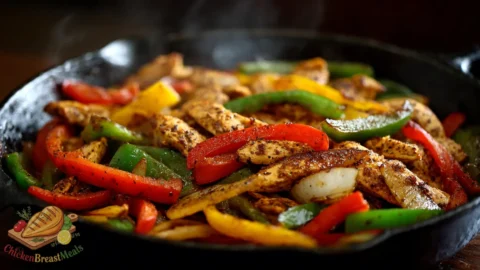
Skillet Chicken Breast Fajitas

Ingredients
- 1.5 pounds boneless skinless chicken breasts approximately 3 medium breasts
- 3 tablespoons fresh lime juice
- 3 tablespoons avocado oil divided
- 1 tablespoon ground cumin
- 2 teaspoons chili powder
- 1 teaspoon smoked paprika
- 1 teaspoon dried oregano preferably Mexican
- 2 teaspoons kosher salt divided
- 1/2 teaspoon black pepper freshly ground
- 3 bell peppers red, yellow, green, sliced into ¼-inch strips
- 1 large white or yellow onion sliced into ¼-inch half-moons
- 3 cloves garlic minced (approximately 1 tablespoon)
- 8-10 flour tortillas 6-inch size
- Lime wedges, fresh cilantro, avocado slices, sour cream, salsa for serving
Method
- Slice chicken breasts against the grain into ¼-inch thick strips, ensuring uniform thickness for even cooking.
- In a medium bowl, combine lime juice, 2 tablespoons avocado oil, cumin, chili powder, smoked paprika, oregano, 1.5 teaspoons salt, and black pepper. Add sliced chicken and toss to coat thoroughly. Allow to marinate for 30 minutes at room temperature (or up to 4 hours refrigerated).
- While chicken marinates, slice bell peppers and onions into uniform ¼-inch strips. Mince garlic and set aside separately.
- Place cast iron skillet over medium-high heat and preheat for 5 minutes until surface temperature reaches approximately 375-400°F.
- Using tongs, remove chicken from marinade, allowing excess to drip off. Cook chicken in a single layer (in batches if necessary) for 2-3 minutes until browned, then flip and cook additional 1-2 minutes until internal temperature reaches 165°F. Remove to a clean plate and tent with foil.
- In the same skillet, add remaining 1 tablespoon avocado oil. Add peppers and onions, sprinkle with remaining salt, and cook over medium-high heat for 4-5 minutes, stirring occasionally. Add garlic during the final 30 seconds of cooking.
- Return cooked chicken to skillet with vegetables, including any accumulated juices. Toss gently to combine and heat through for 1 minute. Remove from heat.
- Warm tortillas in the hot skillet or separately, and serve immediately with fajita mixture and desired accompaniments.
Note
- For maximum tenderness, ensure chicken is sliced against the grain at a consistent thickness.
- The skillet should be very hot (375-400°F) before adding chicken to achieve proper searing.
- Cook vegetables until slightly charred but still crisp for authentic texture.
- For best results, use a 12-inch cast iron or carbon steel skillet for superior heat retention.
- Don’t marinate chicken longer than 4 hours, as the acid will begin to break down proteins too much.