Creamy Mustard Cream Skillet Chicken Breast (Rich & Tangy)

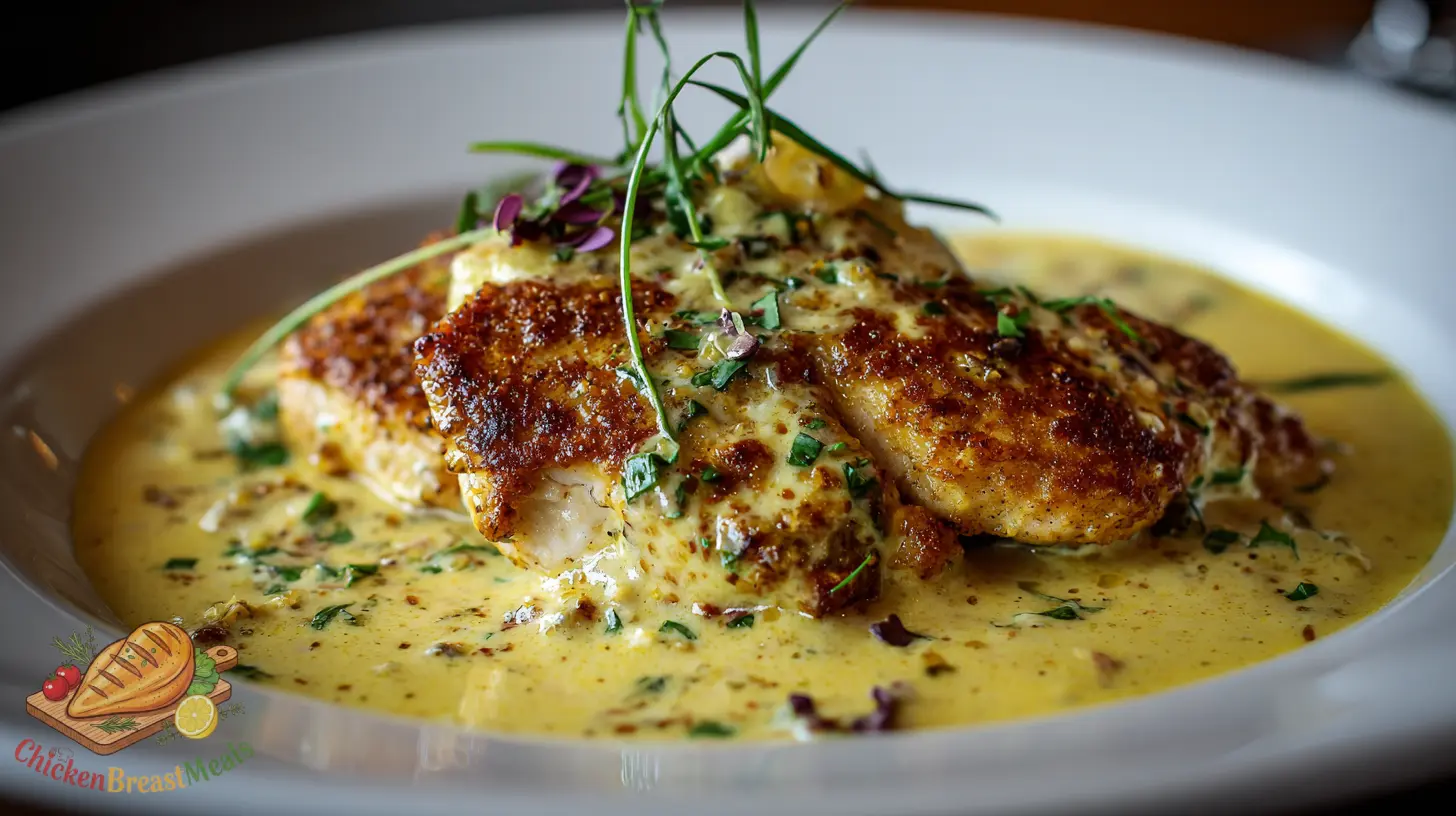
Mustard cream skillet chicken breast delivers restaurant-quality flavor without complex techniques. The magic lies in the perfect balance between tangy mustard and rich cream, creating a sauce that transforms ordinary chicken breasts into a memorable meal. However, achieving the ideal consistency and preventing curdling requires precision.
Many home cooks struggle with this dish because mustard can easily overpower other flavors, and cream sauces are notoriously finicky. The temperature control must be precise to avoid breaking the sauce or overcooking the chicken. Our test kitchen has solved these challenges with a technique that guarantees velvety sauce and juicy chicken every time.
Test-Kitchen Executive Summary
This mustard cream skillet chicken breast recipe employs a dual-cooking method where chicken is first seared to develop fond, then finished with gentle simmering in a sauce built with multiple forms of mustard (Dijon and whole grain). Temperature control is critical—maintaining medium-low heat during sauce building prevents curdling while allowing flavor compounds to fully integrate. The addition of heavy cream occurs off-heat, with gradual temperature increase to ensure emulsion stability. Total active cooking time: 25 minutes.
The Science of Success: Why This Recipe Works
Technical Foundations
The success of this recipe hinges on understanding the chemical interactions between protein, fat, and acid. Chicken breasts develop optimal flavor through the Maillard reaction during the initial sear, creating flavorful compounds that form the base of the sauce. This technique builds upon the foundational methods we explore in our complete pan-fried chicken breast guide, with specialized adaptations for cream sauce integration.
The mustard cream sauce relies on proper emulsion science—the acid in mustard must be balanced by fat in the cream to prevent separation. We use a multi-stage approach:
1. A base of aromatics (shallots and garlic) provides volatile flavor compounds
2. Wine creates deglazing action to incorporate fond into the sauce
3. Mustard is added while heat is moderate, allowing its compounds to bloom without becoming bitter
4. Heavy cream is incorporated off-heat initially, then gently warmed to prevent protein coagulation
Temperature control is the defining factor—too hot and the sauce breaks, too cool and the flavors don’t marry properly.
Ingredients and Essential Tools
For the Chicken:
- 2 boneless, skinless chicken breasts (8 oz each), patted completely dry
- 1 tablespoon neutral oil (grapeseed or canola)
- 1/2 teaspoon kosher salt
- 1/4 teaspoon freshly ground black pepper
- 1/4 teaspoon garlic powder
For the Mustard Cream Sauce:
- 2 tablespoons unsalted butter
- 1 medium shallot, finely minced (about 3 tablespoons)
- 2 garlic cloves, minced
- 1/4 cup dry white wine (Sauvignon Blanc or Pinot Grigio)
- 1 tablespoon Dijon mustard
- 1 tablespoon whole grain mustard
- 3/4 cup heavy cream (36% fat content)
- 1 teaspoon fresh thyme leaves
- 1/2 teaspoon lemon zest
- 1 tablespoon lemon juice
- Salt and freshly ground black pepper to taste
- Optional: 1 tablespoon fresh tarragon, chopped
Essential Tools:
- 10-12 inch stainless steel skillet (do not use non-stick)
- Digital instant-read thermometer
- Sharp chef’s knife
- Wooden spoon or silicone spatula
- Meat mallet or heavy rolling pin
- Paper towels
- Small bowl for sauce preparation
Step-by-Step Instructions
- Prepare the chicken breasts: Place chicken between two sheets of plastic wrap and pound to an even 1/2-inch thickness. Pat completely dry with paper towels. Season evenly with salt, pepper, and garlic powder on both sides.
- Preheat the skillet: Heat a 12-inch stainless steel skillet over medium-high heat until a droplet of water dances across the surface (approximately 375°F).
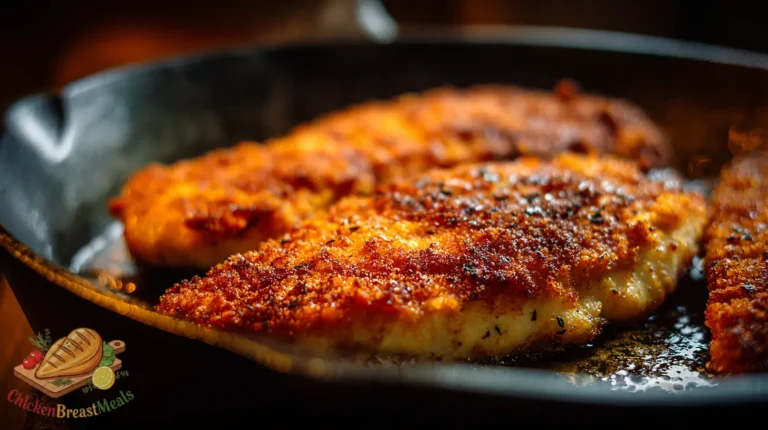
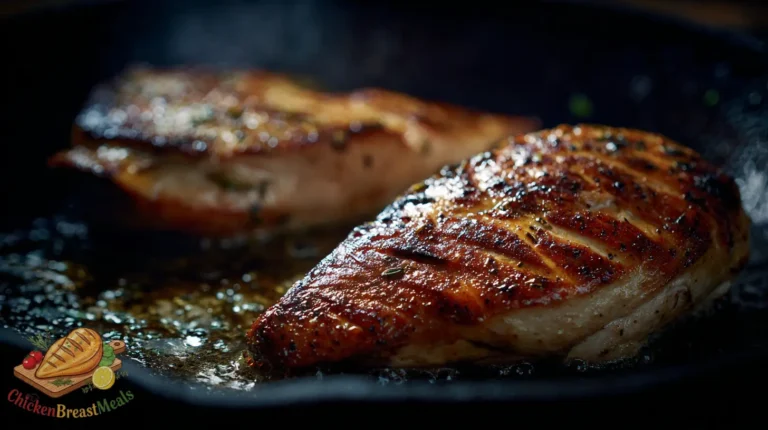
- Sear the chicken: Add oil to the skillet and swirl to coat. Carefully place chicken breasts in the hot skillet without crowding. Cook undisturbed for 5-6 minutes until deeply golden brown. Flip and cook 4-5 minutes on second side until internal temperature reaches 160°F. Transfer to a clean plate and tent loosely with foil.
- Build the sauce base: Reduce heat to medium-low. Add butter to the skillet. Once melted, add minced shallots and cook for 2 minutes until translucent but not browned. Add garlic and cook 30 seconds until fragrant.
- Deglaze the pan: Add white wine and scrape up all browned bits from the pan bottom with a wooden spoon. Simmer until wine is reduced by half, about 2 minutes.
- Incorporate mustards: Whisk in both Dijon and whole grain mustards until fully integrated, about 30 seconds.
- Add cream: Remove pan from heat momentarily. Slowly pour in heavy cream while whisking constantly. Return to low heat and simmer gently for 3-4 minutes until sauce thickens slightly.
- Season and finish: Stir in thyme leaves, lemon zest, and lemon juice. Taste and adjust seasoning with salt and pepper as needed.
- Return chicken to sauce: Place chicken and any accumulated juices back into the skillet. Spoon sauce over chicken and simmer gently for 1-2 minutes to reheat chicken and allow flavors to meld.
- Serve immediately: Garnish with fresh tarragon if using. Serve with sauce spooned over chicken.
| Stage | Critical Temperature | Time | Visual Indicator |
|---|---|---|---|
| Initial Skillet Preheat | 375°F | 3-5 minutes | Water droplet dancing |
| Chicken First Side | Medium-high | 5-6 minutes | Deep golden crust |
| Chicken Second Side | Medium-high | 4-5 minutes | 160°F internal |
| Aromatics | Medium-low | 2-3 minutes | Translucent, not brown |
| Wine Reduction | Medium-low | 2 minutes | Reduced by half |
| Cream Sauce | Low (never boil) | 3-4 minutes | Coats back of spoon |
| Final Simmer | Low | 1-2 minutes | Sauce slightly thickened |
Pro-Tips for Perfect Results
- Temperature control: Never allow the cream sauce to boil after adding the cream—maintain a gentle simmer (180-190°F) to prevent breaking.
- Chicken thickness: Uniform thickness is critical for even cooking. Pound chicken to exactly 1/2-inch thickness throughout.
- Mustard variation: The 1:1 ratio of Dijon to whole grain can be modified based on preference, but maintain the same total quantity (2 Tbsp) to preserve acid-fat balance.
- Pan material: Stainless steel creates superior fond development compared to non-stick or cast iron. This fond is essential for sauce depth.
- Rest period: The brief rest while building the sauce allows the chicken’s proteins to relax, retaining more moisture when reintroduced to the sauce.
- Fat percentage: Heavy cream with 36-40% fat content is essential—lighter creams will break when exposed to the acid in mustard and lemon.
- Wine selection: Use a dry white wine you would drink. Cooking wines often contain salt and additives that negatively impact sauce flavor.
Storage and Reheating
This mustard cream skillet chicken breast can be stored properly but requires careful handling to maintain the sauce emulsion:
Refrigeration: Store chicken and sauce together in an airtight container for up to 3 days. The sauce may thicken significantly when chilled due to fat solidification.
Freezing: Not recommended. Cream-based sauces typically separate upon thawing, resulting in a broken texture that cannot be fully restored.
Reheating Protocol:
1. Remove from refrigerator 30 minutes before reheating to take the chill off
2. Place in a covered skillet over low heat (below 180°F)
3. Add 1-2 tablespoons of heavy cream if sauce appears too thick
4. Gently warm until chicken reaches 165°F internally, stirring sauce occasionally
5. Do not microwave, as this will cause uneven heating and sauce separation
Related Recipes to Try
If you enjoy this mustard cream skillet chicken breast, these related techniques expand your chicken breast repertoire:
- Creamy Mushroom Skillet Chicken Breast – Utilizes similar sauce-building techniques with earthy mushroom flavor components
- White Wine Sauce Skillet Chicken – A lighter sauce profile that emphasizes acidity and brightness
- Lemon-Caper Skillet Chicken Breast – Mediterranean flavor profile with briny elements
- Skillet Chicken with Tarragon Cream – French-inspired variation with pronounced herb notes
- Garlic Parmesan Skillet Chicken – Italian influence with nutty cheese components
FAQs About Mustard Cream Skillet Chicken Breast
Why did my sauce separate or curdle?
Sauce separation typically occurs when heat is too high after adding cream or when acid components (mustard, lemon) are added too quickly. Always add cream off-heat initially, then return to low heat. Incorporate acidic ingredients gradually while whisking constantly.
Can I substitute chicken thighs for breasts?
Yes. Boneless, skinless chicken thighs work excellently but require different cooking times. Cook thighs for approximately 6-7 minutes per side and ensure they reach 175°F internal temperature for optimal tenderness.
What can I substitute for heavy cream to make this lighter?
While heavy cream produces optimal results, half-and-half can work with modifications. Stabilize it by whisking 1 teaspoon of cornstarch with the half-and-half before adding to the pan, and reduce heat even further. Note that the sauce will have a less luxurious mouthfeel.
Is it possible to make this dish dairy-free?
Traditional mustard cream sauce relies on dairy fat for stability. A close approximation can be achieved using full-fat coconut cream (not milk) and 1/2 teaspoon of cornstarch as a stabilizer. The flavor profile will shift significantly toward coconut.
Can I prepare any components in advance?
The chicken can be pounded, seasoned, and refrigerated up to 24 hours ahead. Aromatics (shallots and garlic) can be prepped up to 8 hours in advance. The sauce itself should be made just before serving for optimal texture.
Why is my sauce too thin?
Insufficient reduction is typically the cause. Ensure the sauce simmers for the full 3-4 minutes after adding cream. If still too thin, whisk 1/2 teaspoon cornstarch with 1 teaspoon water and gradually incorporate while simmering for an additional minute.
Conclusion
Mustard cream skillet chicken breast represents a perfect intersection of simplicity and technical cooking skill. The fundamental techniques—proper protein preparation, fond development, emulsion management, and temperature control—create a dish greater than the sum of its parts. What appears straightforward actually involves critical chemical processes that transform basic ingredients into a sophisticated meal.
Our test kitchen experimentation confirms that success hinges on specific details: the dual mustard approach provides complexity impossible with a single variety, while the precise heat management prevents the common pitfall of sauce separation. This recipe demonstrates that understanding the why behind cooking instructions ultimately produces more consistent results.
Master this technique, and you’ll possess not just a delicious recipe but transferable skills applicable to numerous other cream-based pan sauces. The mustard cream approach serves as a gateway to a whole category of quick, elegant chicken breast preparations worthy of any dining table.
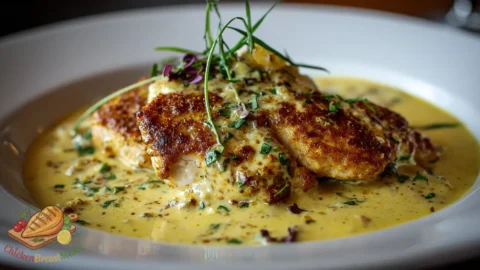
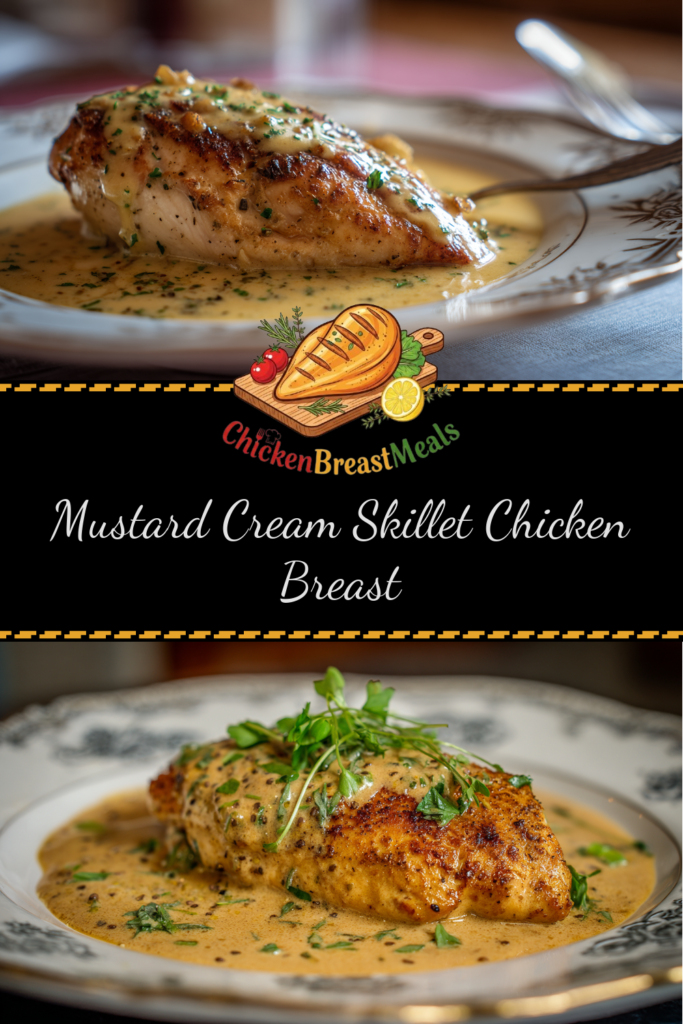
Mustard Cream Skillet Chicken Breast

Ingredients
- 2 boneless, skinless chicken breasts (8 oz each) patted completely dry
- 1 tablespoon neutral oil grapeseed or canola
- 1/2 teaspoon kosher salt for chicken
- 1/4 teaspoon freshly ground black pepper for chicken
- 1/4 teaspoon garlic powder
- 2 tablespoons unsalted butter
- 1 medium shallot finely minced (about 3 tablespoons)
- 2 cloves garlic minced
- 1/4 cup dry white wine Sauvignon Blanc or Pinot Grigio
- 1 tablespoon Dijon mustard
- 1 tablespoon whole grain mustard
- 3/4 cup heavy cream 36% fat content
- 1 teaspoon fresh thyme leaves
- 1/2 teaspoon lemon zest
- 1 tablespoon lemon juice
- Salt and freshly ground black pepper to taste
- 1 tablespoon fresh tarragon, chopped optional
Method
- Place chicken between two sheets of plastic wrap and pound to an even 1/2-inch thickness. Pat completely dry with paper towels. Season evenly with salt, pepper, and garlic powder on both sides.
- Heat a 12-inch stainless steel skillet over medium-high heat until a droplet of water dances across the surface (approximately 375°F).
- Add oil to the skillet and swirl to coat. Carefully place chicken breasts in the hot skillet without crowding. Cook undisturbed for 5-6 minutes until deeply golden brown. Flip and cook 4-5 minutes on second side until internal temperature reaches 160°F. Transfer to a clean plate and tent loosely with foil.
- Reduce heat to medium-low. Add butter to the skillet. Once melted, add minced shallots and cook for 2 minutes until translucent but not browned. Add garlic and cook 30 seconds until fragrant.
- Add white wine and scrape up all browned bits from the pan bottom with a wooden spoon. Simmer until wine is reduced by half, about 2 minutes.
- Whisk in both Dijon and whole grain mustards until fully integrated, about 30 seconds.
- Remove pan from heat momentarily. Slowly pour in heavy cream while whisking constantly. Return to low heat and simmer gently for 3-4 minutes until sauce thickens slightly.
- Stir in thyme leaves, lemon zest, and lemon juice. Taste and adjust seasoning with salt and pepper as needed.
- Place chicken and any accumulated juices back into the skillet. Spoon sauce over chicken and simmer gently for 1-2 minutes to reheat chicken and allow flavors to meld.
- Garnish with fresh tarragon if using. Serve with sauce spooned over chicken.
Note
- Never allow the cream sauce to boil after adding the cream—maintain a gentle simmer (180-190°F) to prevent breaking.
- Uniform chicken thickness is critical for even cooking. Pound chicken to exactly 1/2-inch thickness throughout.
- Use a stainless steel pan for best fond development. Non-stick pans won’t create the same flavor foundation.
- Heavy cream with 36-40% fat content is essential—lighter creams may break when exposed to acid.
- If sauce becomes too thick, thin with a tablespoon of chicken broth or water.