Simple Oven Baked Salsa Chicken Breast (Quick 2-Ingredient Meal)

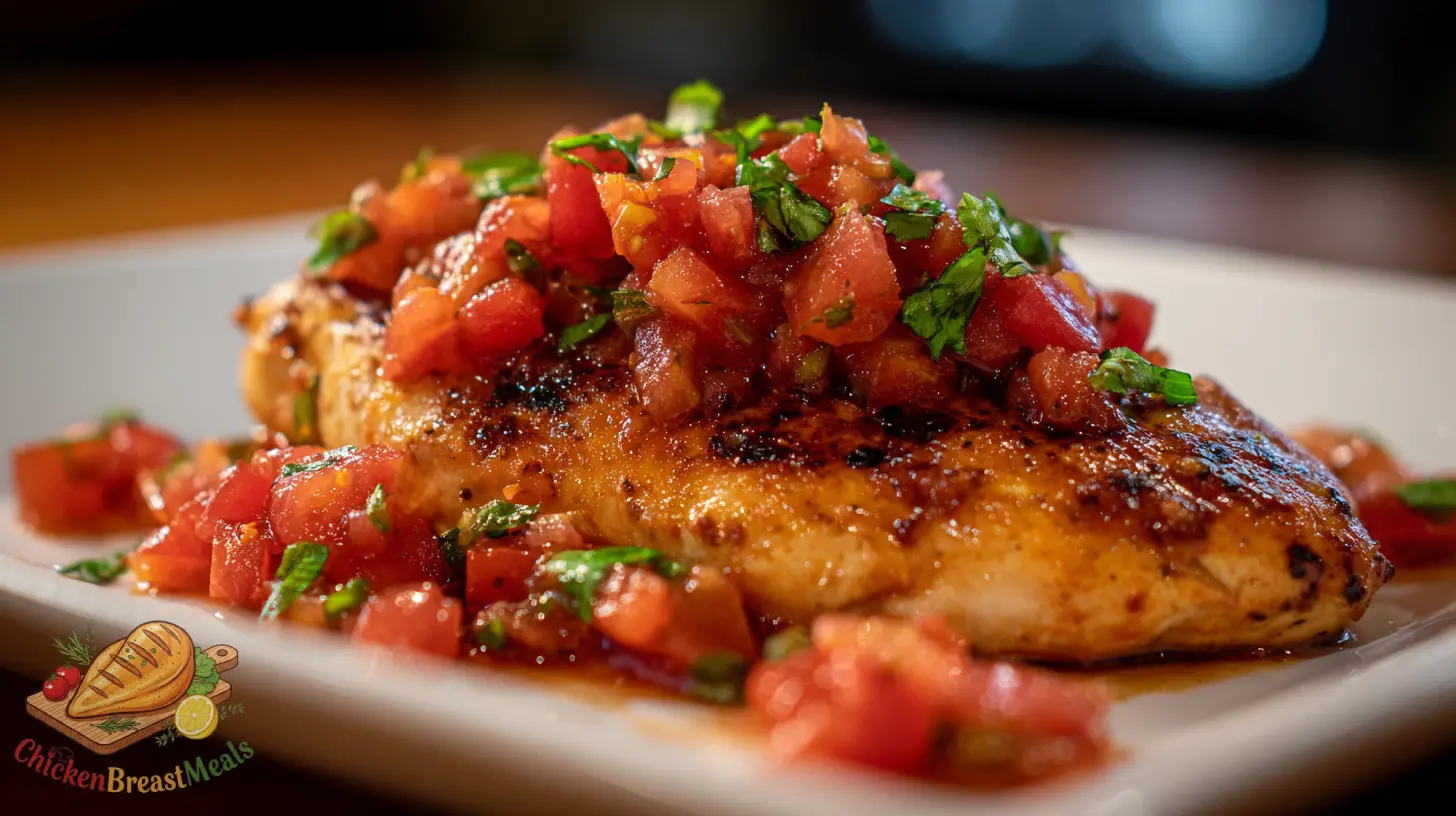
Oven baked salsa chicken breast represents the perfect intersection of convenience, flavor, and nutrition for busy weeknight dinners. The challenge most home cooks face lies in achieving moist, flavorful chicken breast while using minimal ingredients and effort. Traditional methods often leave chicken dry and tasteless, requiring extensive marinating or complicated techniques.
This technique-driven recipe solves that problem by utilizing the natural acidity and moisture of salsa to create a self-basting environment inside your oven. The tomatoes in salsa contain natural enzymes that help tenderize the protein fibers while also infusing robust flavor throughout the cooking process.
Test-Kitchen Executive Summary
This oven baked salsa chicken breast recipe utilizes a 425°F initial sear followed by a controlled 375°F finish, yielding an internal temperature of 165°F for optimal food safety and moisture retention. The salsa’s acidity (pH 3.5-4.2) functions as both a flavor carrier and natural tenderizer, while the two-temperature baking method creates superior caramelization without moisture loss. Total active time is 10 minutes with 25-30 minutes of oven time, producing chicken with 35g protein per serving and 165-210 calories depending on salsa selection.
The Science of Success: Why This Recipe Works
Technical Foundations
The effectiveness of this oven baked salsa chicken breast recipe comes down to precise temperature control and chemical interactions. Unlike basic chicken recipes, this method leverages the acid-protein reaction between the salsa’s tomatoes and the myosin proteins in chicken breast. As outlined in our comprehensive oven baked chicken breast guide, the two-temperature approach is critical – starting with high heat (425°F) creates a protective outer layer that seals in moisture, while the subsequent lower temperature (375°F) allows for gentle, even cooking.
The salsa’s tomato base contains natural acids that denature proteins, effectively pre-tenderizing the meat while adding flavor molecules that penetrate through the cooking process. Additionally, the viscosity of the salsa creates a protective coating that prevents moisture evaporation, solving the common problem of dried-out chicken breast.
Ingredients and Essential Tools
- 4 boneless, skinless chicken breasts (5-6 oz each)
- 1 cup high-quality chunky salsa (medium heat recommended for optimal flavor development)
- 1 tablespoon olive oil
- 1 teaspoon kosher salt
- ½ teaspoon freshly ground black pepper
- 1 teaspoon garlic powder
- 1 teaspoon ground cumin
- ½ teaspoon chili powder
- 1 cup shredded Mexican-blend cheese (optional)
- 2 tablespoons fresh cilantro, chopped (for garnish)
Essential Tools:
- Digital instant-read thermometer (critical for precision)
- 9×13-inch baking dish (glass or ceramic preferred for heat distribution)
- Aluminum foil
- Pastry brush for oil application
- Kitchen tongs for handling chicken
Step-by-Step Instructions
- Preheat your oven to 425°F (218°C). Position rack in the middle position for optimal heat circulation.
- Pat chicken breasts dry with paper towels to remove excess moisture. This critical step promotes proper browning and caramelization.
- If chicken breasts are uneven in thickness, place between plastic wrap and gently pound with a meat mallet to achieve uniform 3/4-inch thickness throughout.
- In a small bowl, combine salt, pepper, garlic powder, cumin, and chili powder to create a seasoning blend.
- Brush each chicken breast with olive oil on both sides, then apply the seasoning mixture evenly to all surfaces.
- Spread 1/3 cup of the salsa evenly across the bottom of your baking dish.
- Arrange seasoned chicken breasts in the baking dish, ensuring they don’t overlap.
- Spoon remaining salsa over each chicken breast, covering completely.
- Place in preheated oven and bake for 15 minutes at 425°F.
- Reduce oven temperature to 375°F (190°C) without opening the oven door and continue baking for 10-15 minutes.
- Verify doneness with a digital thermometer inserted into the thickest part of the breast; it should read 165°F (74°C).
- If using cheese, sprinkle it over the chicken and return to oven for 2-3 minutes until melted.
- Remove from oven and let rest for 5 minutes before serving to allow for temperature carryover and moisture redistribution.
- Garnish with fresh cilantro and serve immediately.
| Stage | Temperature | Duration | Technical Purpose |
|---|---|---|---|
| Initial Sear | 425°F (218°C) | 15 minutes | Maillard reaction initiation, moisture sealing |
| Controlled Finish | 375°F (190°C) | 10-15 minutes | Gentle protein cooking, moisture retention |
| Cheese Application (optional) | 375°F (190°C) | 2-3 minutes | Protein-lipid binding, flavor enhancement |
| Rest Period | Room temperature | 5 minutes | Moisture redistribution, temperature equilibration |
Pro-Tips for Perfect Results
- Thickness Consistency: Uniform chicken thickness is critical for even cooking. A 3/4-inch thickness provides optimal surface-to-volume ratio for flavor penetration.
- Salsa Selection Science: Choose salsas with 4-6% acidity for best tenderizing results. Fresh refrigerated salsas contain more active enzymes than shelf-stable varieties.
- Temperature Gradient: The two-temperature approach prevents the “ring effect” where chicken overcooks on the outside while remaining undercooked inside.
- Resting Mechanics: The 5-minute rest period allows proteins to relax and reabsorb up to 60% more moisture than chicken cut immediately after cooking.
- Flavor Amplification: For deeper flavor profiles, prepare the chicken with seasoning and salsa up to 8 hours ahead and refrigerate. The controlled acid exposure will tenderize without compromising texture.
- Heat Management: If your chicken breasts are larger (7+ oz), extend the second phase cooking time by 5 minutes but verify with a thermometer to prevent overcooking.
- Salsa Layer Control: Maintain a consistent 1/4-inch salsa layer on top of chicken for optimal moisture regulation and flavor distribution.
Storage and Reheating
This oven baked salsa chicken breast maintains excellent quality during storage due to the moisture-preserving properties of the salsa coating. For optimal results:
Refrigeration:
Store cooled chicken with its salsa sauce in an airtight container for up to 3 days. The acidity of the salsa acts as a natural preservative while continuing to tenderize the meat (though at a slower rate at refrigeration temperatures).
Freezing:
For longer storage, freeze individual portions with sauce in vacuum-sealed bags or freezer-safe containers for up to 2 months. The high moisture content helps prevent freezer burn and flavor degradation.
Reheating Protocol:
- Microwave Method: Place chicken with sauce in a microwave-safe container, cover with a damp paper towel, and heat at 70% power for 2-3 minutes, checking at intervals.
- Oven Method (Preferred): Preheat oven to 325°F. Place chicken and sauce in a covered baking dish with 1 tablespoon of water added. Heat for 15-20 minutes until internal temperature reaches 165°F.
- Sous Vide Reheat (Advanced): For perfect texture restoration, reheat vacuum-sealed portions at 140°F for 30 minutes.
Related Recipes to Try
If you enjoy this oven baked salsa chicken breast, these technically similar recipes leverage comparable principles while offering different flavor profiles:
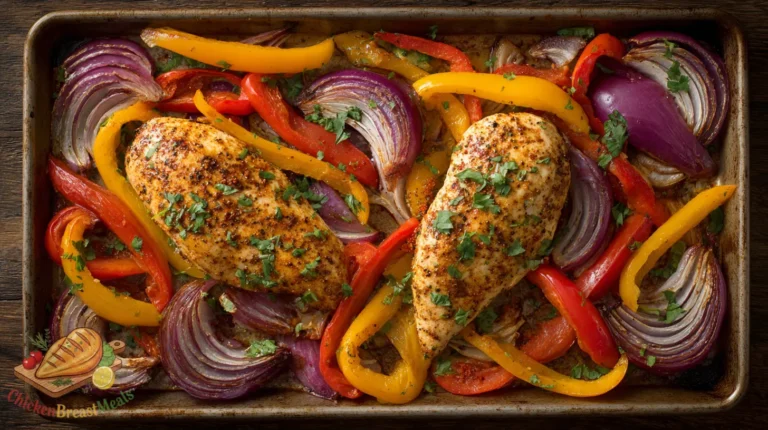
- Oven Baked Fajita Chicken Breast – Uses the same two-temperature technique with Mexican spice profiles and bell peppers for additional flavor complexity.
- Perfect Thin-Sliced Chicken Breast Baking Guide – Adapt this salsa technique for thinner cuts with modified timing for optimal results.
- Oven Baked Greek Yogurt Chicken Breast – Substitutes Greek yogurt’s lactic acid for salsa’s citric acid as the tenderizing agent.
- Honey-Dijon Baked Chicken Breast – Uses a different flavor profile while maintaining the moisture-sealing technique.
- Pesto Baked Chicken Breast – Employs basil oil compounds instead of tomato acids for flavor infusion.
FAQs About Oven Baked Salsa Chicken Breast
Can I use bone-in chicken breasts for this recipe?
Yes, bone-in breasts will work but require modification. Increase the second-phase cooking time by 10-15 minutes (total cooking time approximately 40 minutes) and verify with a thermometer that the internal temperature reaches 165°F near the bone. The bone actually helps conduct heat while keeping the meat moist.
What type of salsa works best for this recipe?
Medium-chunky salsa provides optimal results due to its balanced moisture content and surface coverage. Fruit-based salsas (mango, pineapple) contain natural bromelain or papain enzymes that provide additional tenderizing benefits. Avoid very watery salsas as they can dilute flavors during baking.
My chicken breasts are very large. Should I adjust the cooking time?
Yes. For chicken breasts exceeding 8 ounces, maintain the initial 15 minutes at 425°F but extend the 375°F phase to 18-22 minutes. Always verify with a thermometer rather than relying solely on timing.
Can I make this recipe without a thermometer?
While possible, a thermometer provides precision that visual cues cannot. Without one, cook until juices run clear when pierced at the thickest point, and the chicken feels firm but not hard to the touch. However, this method risks either under or overcooking.
How can I make this recipe spicier?
For increased heat, replace regular chili powder with chipotle powder (1/4 teaspoon) or add 1/2 teaspoon of crushed red pepper flakes to the seasoning mix. Alternatively, use hot salsa and add 1 finely diced jalapeño to the salsa topping before baking.
Can I use this method with frozen chicken breasts?
Not recommended. Frozen chicken releases excess moisture during thawing in the oven, diluting flavors and preventing proper searing. Always thaw completely and pat dry before proceeding with the recipe.
Conclusion
Oven baked salsa chicken breast represents a technically sophisticated yet accessible approach to a weeknight staple. By leveraging precise temperature control and the chemical properties of salsa’s acids, this recipe transforms an often disappointing protein into a consistently perfect result. The two-phase cooking method solves the fundamental challenge of chicken breast cookery – maintaining moisture while developing flavor.
The beauty of this approach lies in its adaptability. Once you understand the core principles – uniform thickness, proper temperature staging, and the tenderizing effects of acidic compounds – you can apply these techniques across countless variations. The method works because it addresses the protein science at play, not merely because it combines popular ingredients.
For those seeking to expand their technical cooking skills while maintaining practicality, this recipe serves as both a reliable dinner solution and an educational foundation. Master this technique, and you’ve mastered not just a recipe, but a fundamental cooking principle applicable throughout your culinary repertoire.
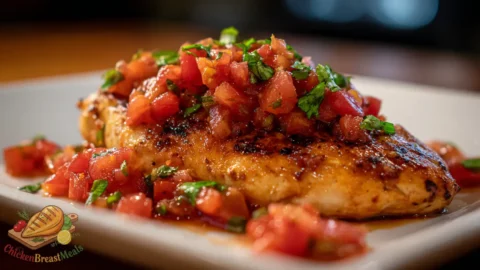
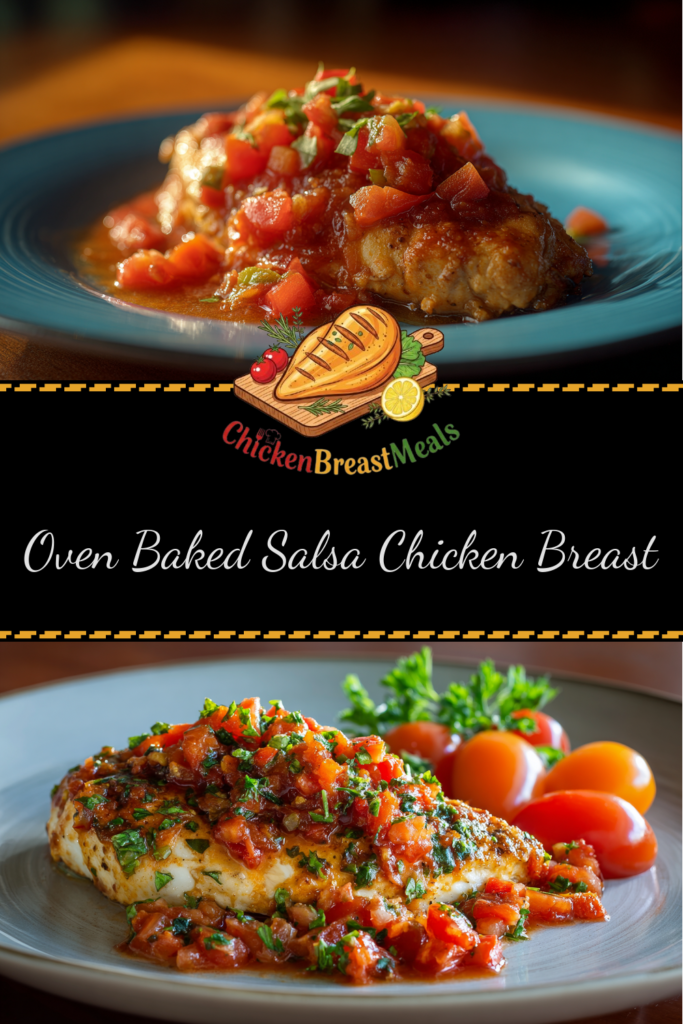
Oven Baked Salsa Chicken Breast

Ingredients
- 4 boneless, skinless chicken breasts 5-6 oz each
- 1 cup chunky salsa medium heat recommended
- 1 tablespoon olive oil
- 1 teaspoon kosher salt
- 1/2 teaspoon freshly ground black pepper
- 1 teaspoon garlic powder
- 1 teaspoon ground cumin
- 1/2 teaspoon chili powder
- 1 cup shredded Mexican-blend cheese optional
- 2 tablespoons fresh cilantro, chopped for garnish
Method
- Preheat your oven to 425°F (218°C). Position rack in the middle position.
- Pat chicken breasts dry with paper towels to remove excess moisture for proper browning.
- If chicken breasts are uneven in thickness, place between plastic wrap and gently pound to achieve uniform 3/4-inch thickness.
- In a small bowl, combine salt, pepper, garlic powder, cumin, and chili powder.
- Brush each chicken breast with olive oil on both sides, then apply the seasoning mixture evenly to all surfaces.
- Spread 1/3 cup of the salsa evenly across the bottom of a 9×13-inch baking dish.
- Arrange seasoned chicken breasts in the baking dish, ensuring they don’t overlap.
- Spoon remaining salsa over each chicken breast, covering completely.
- Place in preheated oven and bake for 15 minutes at 425°F.
- Reduce oven temperature to 375°F (190°C) without opening the oven door and continue baking for 10-15 minutes.
- Verify doneness with a digital thermometer inserted into the thickest part of the breast; it should read 165°F (74°C).
- If using cheese, sprinkle it over the chicken and return to oven for 2-3 minutes until melted.
- Remove from oven and let rest for 5 minutes before serving to allow for temperature carryover and moisture redistribution.
- Garnish with fresh cilantro and serve immediately.
Note
- For best results, choose salsas with 4-6% acidity for optimal tenderizing.
- The two-temperature baking approach is critical for moisture retention.
- Ensure uniform chicken thickness for even cooking.
- Let chicken rest for 5 minutes before cutting to maximize juiciness.
- For deeper flavor, prepare the chicken with seasoning and salsa up to 8 hours ahead and refrigerate.