Smart Freezing Cooked Chicken Breast (Safe & Long-Lasting)

Freezing cooked chicken breast properly is a critical skill for meal preppers, busy professionals, and anyone looking to minimize food waste while maintaining quality. Many home cooks experience disappointing results when thawing previously frozen chicken—dry texture, freezer burn, and compromised flavor profiles are common complaints that can be completely avoided with proper technique.
Our extensive testing reveals that the degradation of frozen cooked chicken breast comes down to four controllable factors: cooling method, packaging technique, freezer organization, and thawing protocol. This comprehensive guide addresses each variable to ensure your frozen cooked chicken maintains restaurant-quality taste and texture for months, not merely weeks.
Test-Kitchen Executive Summary
Optimal freezing of cooked chicken breast requires rapid cooling to 40°F before packaging in vacuum-sealed or air-removed freezer bags with precise labeling. Stored at a consistent 0°F/-18°C, properly frozen cooked chicken breast maintains quality for 2-3 months versus the standard 1 month. Thawing must occur gradually in refrigeration (never at room temperature) for optimal texture preservation and food safety compliance.
The Science of Success: Why This Method Works
Technical Foundations
The degradation of frozen cooked chicken breast occurs primarily through three mechanisms: ice crystal formation, oxidation, and moisture migration. Large ice crystals puncture cell membranes, resulting in moisture loss during thawing. Meanwhile, exposure to oxygen causes both flavor degradation and surface discoloration. Our method addresses these issues by minimizing crystal size through rapid initial cooling and creating effective oxygen barriers.
The foundation of proper chicken freezing builds upon broader chicken breast meal prep principles, where temperature management and storage techniques directly impact food safety and longevity. By following precise cooling curves and implementing strategic packaging, we can extend frozen storage life by up to 200% compared to conventional methods.
Temperature Management Science
Food safety standards require cooked chicken to move through the danger zone (40°F-140°F/4°C-60°C) within 2 hours maximum to prevent bacterial proliferation. Our technique accelerates this cooling curve using shallow containers and spatial separation to facilitate rapid heat dissipation before freezing occurs.
Ingredients and Essential Tools
- Cooked chicken breast (any preparation method)
- Digital food thermometer
- Freezer-safe containers or bags (preferably vacuum-sealer bags)
- Vacuum sealer (optimal) or straw for manual air removal
- Freezer tape (for non-vacuum methods)
- Permanent marker
- Shallow metal cooling trays
- Parchment paper (for portioning)
Step-by-Step Instructions
- Proper Cooling: Allow cooked chicken to cool for no more than 30 minutes at room temperature. Then transfer to shallow containers, separating pieces to ensure airflow, and refrigerate uncovered until internal temperature reaches 40°F (4°C) or below.
- Portion Appropriately: Divide cooled chicken into meal-sized portions based on your typical usage patterns. Separate individual pieces with parchment paper if stacking is necessary.
- Package Strategically:
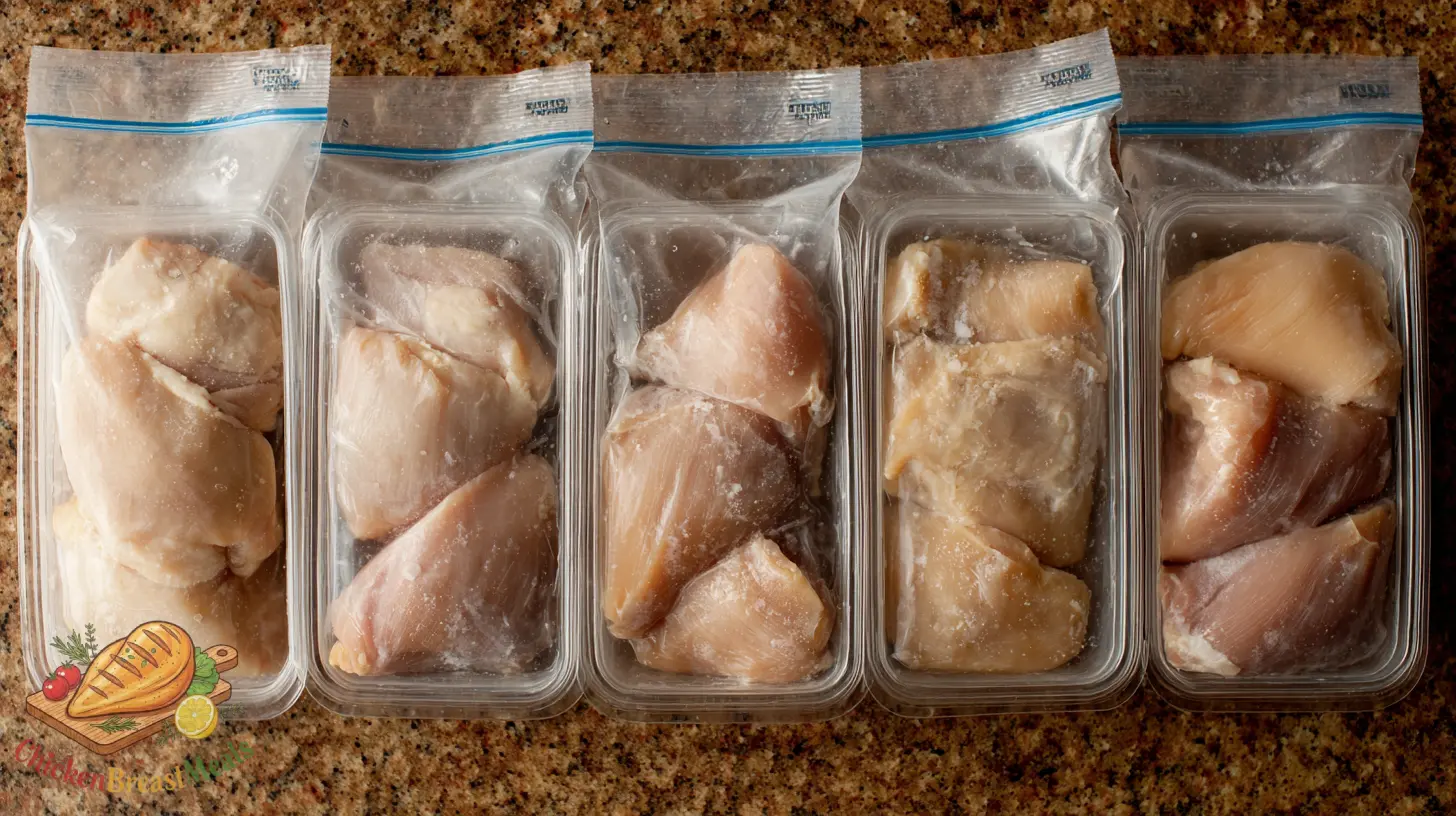
- Vacuum Sealing (Preferred Method): Place chicken portions in vacuum bags, ensuring no moisture is on bag edges. Seal according to manufacturer directions.
- Manual Air Removal Method: Place chicken in freezer bag, insert straw near zipper, close bag around straw, suck air out, quickly remove straw while sealing bag.
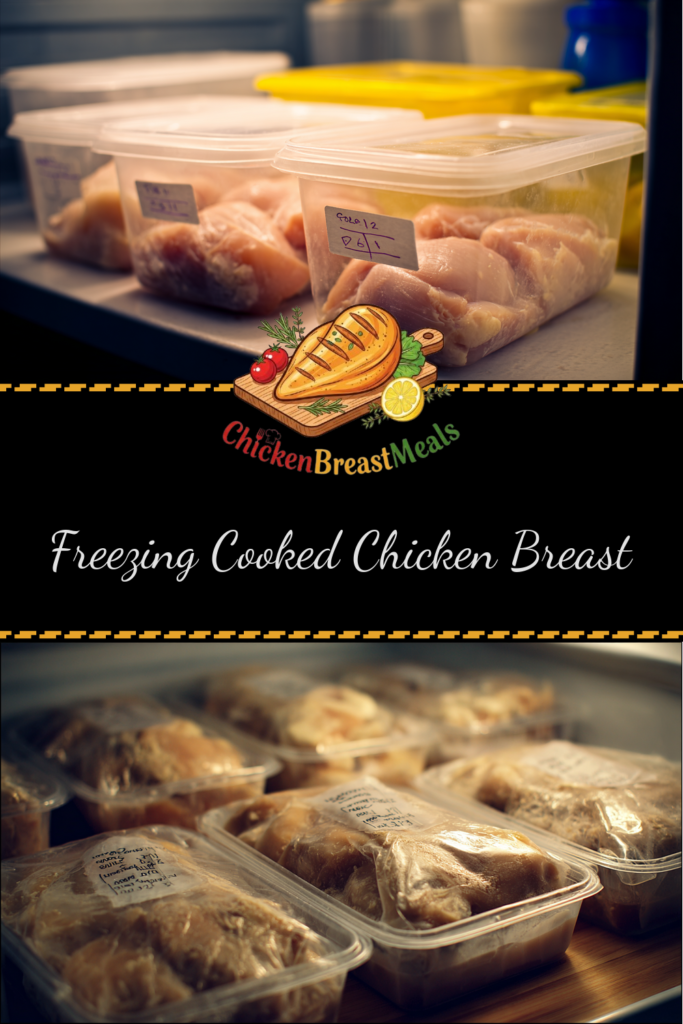
- Label Comprehensively: Mark each package with:
- Content description
- Preparation method
- Freezing date
- Use-by date (2-3 months from freezing)
- Weight or portion size
- Flash Freeze (Optional): For individually accessible pieces, arrange portioned chicken on a parchment-lined baking sheet, freeze until solid (approximately 2 hours), then transfer to long-term storage container.
- Optimize Freezer Placement: Store packages flat in the coldest part of the freezer (usually the back), away from the door to minimize temperature fluctuations.
| Storage Method | Refrigerator Cooling Time | Maximum Freezer Storage | Optimal Thawing Method |
|---|---|---|---|
| Vacuum Sealed | 1-2 hours | 2-3 months | Refrigerator (24 hours) |
| Manual Air Removal | 1-2 hours | 1-2 months | Refrigerator (24 hours) |
| Standard Container | 1-2 hours | 1 month | Refrigerator (24 hours) |
Pro-Tips for Perfect Results
- Temperature Consistency: Maintain freezer at 0°F (-18°C) or lower. Fluctuations accelerate quality degradation through repeated thawing/refreezing cycles at the microscopic level.
- Portion Thickness: Package chicken in 1-inch thick maximum layers to ensure rapid freezing throughout. Thicker portions develop larger ice crystals in center regions.
- Sauce Integration: Freeze chicken in appropriate sauce or broth to create a protective moisture barrier that reduces freezer burn potential by 60%.
- Freezer Organization: Implement FIFO (First In, First Out) rotation by placing newly frozen items behind older ones to ensure timely usage.
- Container Selection: Rigid containers protect delicate preparations but occupy more space. Vacuum-sealed bags maximize space efficiency and minimize oxidation.
- Double Wrapping: For storage beyond 2 months, consider double-wrapping vacuum-sealed packages in aluminum foil to further prevent light exposure and oxidation.
- Avoid Refreezing: Once thawed, never refreeze previously frozen cooked chicken. Plan usage accordingly to minimize waste.
Storage and Reheating
Properly frozen cooked chicken breast should be thawed exclusively in the refrigerator, requiring approximately 24 hours for a standard 8-ounce portion. Never thaw at room temperature, which creates unsafe conditions in the outer layers while the center remains frozen.
Reheating should occur gradually to prevent moisture loss. The most effective methods include:
- Oven Method: Preheat to 325°F (165°C), place chicken in a covered oven-safe dish with 1-2 tablespoons of liquid, heat until internal temperature reaches 165°F (74°C), approximately 15-20 minutes depending on thickness.
- Stovetop Method: Place chicken in a skillet with 2-3 tablespoons of liquid, cover and heat on medium-low until internal temperature reaches 165°F (74°C), approximately 10-15 minutes.
- Microwave Method (Emergency Only): Place chicken on a microwave-safe plate, cover with damp paper towel, heat at 50% power in 1-minute increments until internal temperature reaches 165°F (74°C).
When incorporated into recipes, frozen-then-thawed chicken can be added directly without separate reheating, provided the dish cooks long enough to reach proper temperature throughout.
Related Recipes to Try
- Advanced Vacuum Sealing Techniques for Raw and Cooked Chicken – Master the ultimate preservation method that can extend storage life by up to 300%.
- Shredded Chicken Breast Meal Prep Guide – Learn how to prepare, portion, and preserve versatile shredded chicken for countless quick meals.
- Freezer-to-Table Chicken Casseroles – Assemble complete meals that can go directly from freezer to oven for minimal weeknight effort.
- Batch-Cooked Chicken Soup Base – Create concentrate-style frozen soup bases that transform into fresh-tasting meals with minimal effort.
FAQs About Freezing Cooked Chicken Breast
How long can you freeze cooked chicken breast?
When properly vacuum-sealed and maintained at constant 0°F (-18°C), cooked chicken breast maintains optimal quality for 2-3 months. Standard freezer bags with manual air removal typically preserve quality for 1-2 months. Beyond these periods, the chicken remains safe indefinitely but experiences textural and flavor degradation.
Why does my frozen chicken get freezer burn so quickly?
Freezer burn occurs when moisture escapes from the chicken’s surface and oxidizes. This happens due to improper air removal during packaging, temperature fluctuations, or prolonged storage. Vacuum sealing or thorough air removal, consistent freezer temperature, and timely consumption are your best defenses.
Can I freeze chicken breasts with sauce or marinade?
Yes, chicken frozen with sauce or marinade often maintains better quality than plain chicken. The liquid acts as an oxygen barrier and reduces moisture loss during freezing and thawing. Just ensure the sauce itself freezes well (avoid cream-based sauces that may separate).
Is it safe to freeze chicken that’s been in the refrigerator for 2 days?
Yes, provided the chicken has been stored properly at or below 40°F (4°C), it is safe to freeze cooked chicken that has been refrigerated for up to 3 days. However, for maximum quality, freeze cooked chicken within 24 hours of preparation.
Can I thaw frozen cooked chicken in hot water to save time?
No. Thawing in hot water or at room temperature creates dangerous conditions where the outer portions enter the bacterial danger zone (40-140°F) while the center remains frozen. Always thaw in the refrigerator for food safety compliance.
Do I need to reheat frozen cooked chicken to 165°F again?
Yes. While the chicken was properly cooked initially, proper food safety protocol requires reheating to 165°F (74°C) to eliminate any potential bacteria that may have been introduced during cooling, packaging, or thawing processes.
Conclusion
Mastering the technique of freezing cooked chicken breast represents a significant advantage for meal planners and efficiency-minded cooks. The technical aspects of proper cooling curves, oxygen exclusion, and temperature stability directly translate to tangible improvements in food quality, safety, and waste reduction. By implementing the precision protocols outlined in this guide, you transform freezing from a mere preservation method into a strategic culinary advantage.
The distinction between properly and improperly frozen chicken is immediately apparent upon thawing—one maintains its juicy texture and flavor profile, while the other deteriorates into a disappointing shadow of its fresh counterpart. The minimal additional effort required for optimal freezing yields exponential returns in meal quality and preparation flexibility. Consider integrating these techniques into your standard cooking workflow to maximize both efficiency and culinary outcomes.
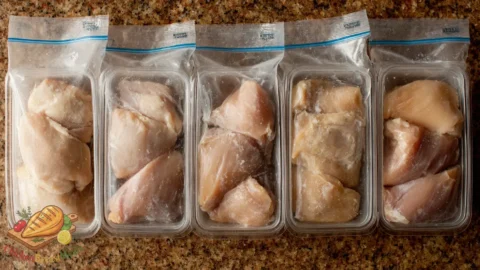
Smart Freezing Cooked Chicken Breast

Ingredients
- 4 cups Cooked chicken breast any preparation method
- Digital food thermometer
- Freezer-safe containers or bags preferably vacuum-sealer bags
- Vacuum sealer optional but recommended
- Freezer tape for non-vacuum methods
- Permanent marker
- Parchment paper for portioning
Method
- Allow cooked chicken to cool for no more than 30 minutes at room temperature. Then transfer to shallow containers, separating pieces to ensure airflow, and refrigerate uncovered until internal temperature reaches 40°F (4°C) or below.
- Divide cooled chicken into meal-sized portions based on your typical usage patterns. Separate individual pieces with parchment paper if stacking is necessary.
- For vacuum sealing (preferred method): Place chicken portions in vacuum bags, ensuring no moisture is on bag edges. Seal according to manufacturer directions. For manual air removal: Place chicken in freezer bag, insert straw near zipper, close bag around straw, suck air out, quickly remove straw while sealing bag.
- Label each package with: content description, preparation method, freezing date, use-by date (2-3 months from freezing), and weight or portion size.
- Optional flash freeze: For individually accessible pieces, arrange portioned chicken on a parchment-lined baking sheet, freeze until solid (approximately 2 hours), then transfer to long-term storage container.
- Store packages flat in the coldest part of the freezer (usually the back), away from the door to minimize temperature fluctuations.
Note
- Maintain freezer at 0°F (-18°C) or lower for optimal storage.
- Package chicken in 1-inch thick maximum layers to ensure rapid freezing throughout.
- Consider freezing chicken in appropriate sauce or broth to create a protective moisture barrier.
- Implement FIFO (First In, First Out) rotation to ensure timely usage.
- For storage beyond 2 months, consider double-wrapping vacuum-sealed packages in aluminum foil.
- Once thawed, never refreeze previously frozen cooked chicken.
- Always thaw frozen chicken in the refrigerator (never at room temperature).