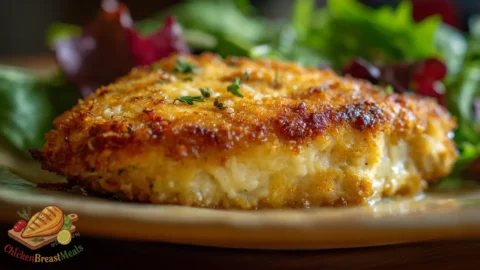
Golden Oven Baked Parmesan Crusted Chicken Breast (Cheesy & Crispy)

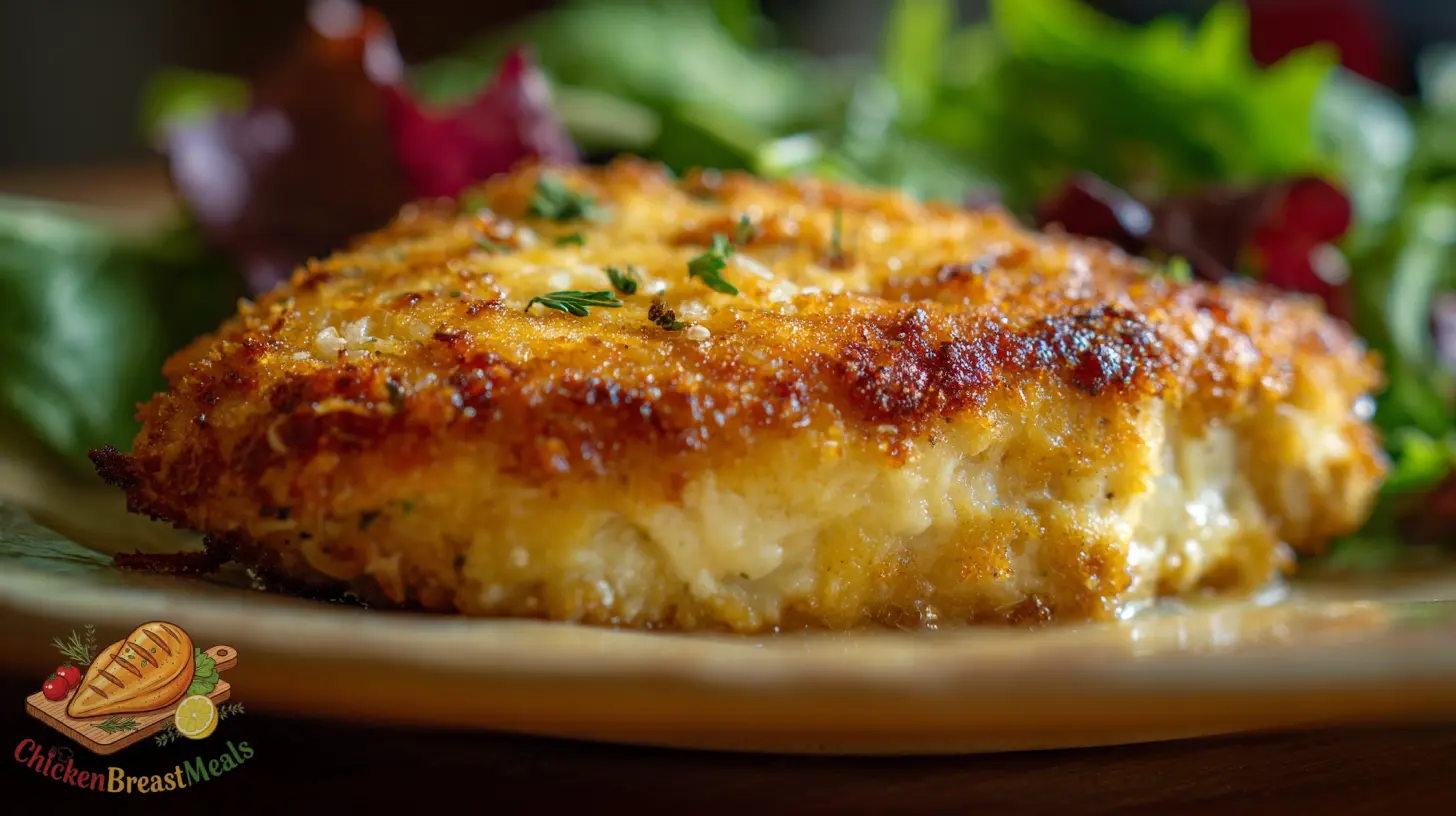
Oven baked parmesan crusted chicken breast represents the perfect intersection of convenience, flavor, and technique. While it might seem straightforward to create a crispy, cheese-coated exterior while maintaining juicy meat inside, achieving the optimal balance requires precision. Many home cooks struggle with either soggy crusts that slide off or overcooked chicken that sacrifices moisture for exterior crispness.
The challenge lies in creating proper adhesion between the parmesan mixture and the chicken while ensuring the cheese browns beautifully without burning. Temperature management becomes critical, as does understanding the interplay between the chicken’s natural moisture and the crust development process.
Test-Kitchen Executive Summary
This technical approach to parmesan crusted chicken breast utilizes a three-stage breading process enhanced with a specialized parmesan mixture containing both finely grated and coarsely shredded cheese for optimal texture and melt properties. A 425°F (218°C) oven temperature creates ideal browning conditions while a strategic resting period and internal temperature target of 165°F (74°C) ensures juiciness retention. The addition of panko breadcrumbs provides structural support to prevent cheese slippage during the cooking process.
The Science of Success: Why This Recipe Works
Technical Foundations
The success of this recipe hinges on understanding the chemical and physical reactions that occur during the cooking process. Parmesan cheese contains approximately 29% protein and 21% fat, giving it excellent browning capabilities through the Maillard reaction. By combining parmesan with breadcrumbs, we create a matrix that adheres well to the chicken while forming a protective barrier that seals in moisture.
Temperature control is paramount in this recipe. As outlined in our comprehensive oven baked chicken breast guide, the key to juicy chicken is balancing high initial heat to jumpstart browning with proper internal temperature monitoring. For parmesan crusting specifically, we need enough heat to melt and brown the cheese without burning it before the chicken cooks through.
The three-stage breading process (flour, egg wash, cheese-breadcrumb mixture) creates multiple adhesion layers that ensure the crust stays intact during cooking. The initial flour coating provides microscopic roughness for the egg wash to cling to, while the egg proteins coagulate during cooking to cement the final layer in place.
Ingredients and Essential Tools
For the Chicken:
- 2 boneless, skinless chicken breasts (8-10 oz each)
- 1 tsp kosher salt
- ½ tsp freshly ground black pepper
- ½ tsp garlic powder
- ½ tsp dried oregano
For the Breading Station:
- ½ cup all-purpose flour
- 2 large eggs
- 1 tbsp water
- 1 cup finely grated Parmigiano-Reggiano cheese (use microplane for best texture)
- ¼ cup coarsely shredded parmesan cheese (for texture contrast)
- ¾ cup panko breadcrumbs
- 2 tbsp finely chopped fresh parsley
- 1 tsp garlic powder
- ½ tsp paprika
- 2 tbsp olive oil (for drizzling)
Essential Equipment:
- Wire rack set inside a rimmed baking sheet
- Instant-read digital meat thermometer
- 3 shallow dishes for breading station
- Meat mallet or rolling pin
- Paper towels
- Kitchen tongs
Step-by-Step Instructions
- Prepare the chicken: Place chicken breasts between two sheets of plastic wrap and pound to an even thickness of approximately ½-inch. Pat thoroughly dry with paper towels. Season both sides with salt, pepper, garlic powder, and dried oregano.
- Preheat and prepare: Position an oven rack in the middle position and preheat to 425°F (218°C). Set up a wire rack inside a rimmed baking sheet and lightly spray with cooking oil.
- Set up breading station: Arrange three shallow dishes in a row. In the first dish, place flour. In the second dish, whisk eggs with 1 tbsp water until smooth. In the third dish, combine both types of parmesan cheese, panko breadcrumbs, parsley, garlic powder, and paprika. Mix thoroughly.
- Bread the chicken: Working with one piece at a time, dredge chicken in flour, shaking off excess. Dip in egg wash, allowing excess to drip off. Press firmly into the parmesan mixture, ensuring complete coverage and pressing the mixture onto both sides of the chicken to adhere.
- Arrange for baking: Place the breaded chicken breasts on the prepared wire rack, leaving at least 2 inches between pieces. Drizzle each piece with 1 tbsp olive oil to promote browning.
- Bake with precision: Bake in the preheated oven until the crust is golden brown and the internal temperature reaches 165°F (74°C) at the thickest part, about 15-18 minutes.
- Rest before serving: Allow the chicken to rest on the wire rack for 5 minutes before serving. This resting period allows juices to redistribute throughout the meat while the residual heat completes the cooking process.
| Step | Time | Temperature | Visual Cue |
|---|---|---|---|
| Initial baking | 15-18 minutes | 425°F (218°C) | Golden brown crust formation |
| Temperature check | At 15-minute mark | Target: 165°F (74°C) internal | Instant-read thermometer inserted at thickest part |
| Resting period | 5 minutes | Carryover cooking occurs | Juices should run clear when cut |
Pro-Tips for Perfect Results
- Temperature gradient: Remove chicken from refrigerator 20 minutes before cooking to take the chill off. This promotes even cooking from exterior to center.
- Cheese ratio matters: The 4:1 ratio between finely grated and coarsely shredded parmesan creates the optimal texture matrix. The fine cheese provides coverage while the shredded creates pockets that brown beautifully.
- Wire rack advantage: Elevating the chicken on a wire rack allows hot air circulation underneath, preventing the soggy bottom syndrome common with parmesan crusts.
- Panko selection: Japanese-style panko breadcrumbs provide superior crispness due to their larger, flakier structure compared to traditional breadcrumbs.
- Oil drizzle technique: Rather than mixing oil into the breading (which can cause clumping), drizzling it over the top just before baking helps achieve even browning without sacrificing crispness.
- Parmesan authenticity: Use genuine Parmigiano-Reggiano for optimal results. Pre-grated cheeses often contain anti-caking agents that can inhibit proper melting.
- Humidity control: For extra-crispy results in humid environments, place the breaded chicken uncovered in the refrigerator for 30 minutes before baking to dry the exterior slightly.
Storage and Reheating
Properly stored parmesan crusted chicken breast can maintain quality for several days. For optimal results, follow these technical guidelines:
Refrigeration Protocol:
Allow chicken to cool completely before refrigerating. Store in an airtight container lined with paper towels to absorb excess moisture. Place additional paper towels between layers if stacking. Consume within 3-4 days for optimal quality.
Reheating Methodology:
For best texture restoration, place refrigerated chicken on a wire rack over a baking sheet in a preheated 350°F (177°C) oven for 10-12 minutes until heated through (internal temperature of 145°F/63°C). Avoid microwave reheating, which creates steam and destroys crust integrity.
Freezing Guidelines:
Freeze fully cooled chicken pieces individually on a parchment-lined baking sheet until solid (approximately 2 hours), then transfer to vacuum-sealed bags or freezer containers with parchment between layers. Consume within 2 months. Thaw overnight in refrigerator before reheating using the oven method above, adding 3-5 minutes to the reheating time.
Related Recipes to Try
Once you’ve mastered this parmesan crusted chicken breast technique, consider exploring these related preparations that utilize similar principles with different flavor profiles:
- Crispy Oven Baked Breaded Chicken Breast – A classic preparation focusing on maximum crunch factor with traditional breadcrumbs
- Oven Baked Mayonnaise Chicken Breast – Utilizes mayonnaise as both a moisture-sealing agent and adhesive base
- Herb-Crusted Chicken Breast – Incorporates fresh herbs into the breading matrix for aromatic complexity
- Spicy Panko-Crusted Chicken Breast – Adds cayenne and chili powders for heat dimension
- Lemon-Parmesan Chicken Breast – Integrates lemon zest for citrus brightness to balance the savory parmesan notes
FAQs About Oven Baked Parmesan Crusted Chicken Breast
Why does my parmesan crust sometimes slide off the chicken during cooking?
Crust separation typically occurs due to insufficient drying of the chicken surface before breading or inadequate pressing of the breading onto the meat. Ensure chicken is thoroughly patted dry with paper towels and press the parmesan mixture firmly onto all surfaces. Additionally, allowing the breaded chicken to rest for 5-10 minutes before baking helps the breading adhere better.
Can I use pre-grated parmesan cheese from the store?
While convenient, pre-grated parmesan often contains anti-caking agents that affect both melting properties and adhesion. For optimal results, grate fresh Parmigiano-Reggiano cheese just before use. If you must use pre-grated, look for varieties without added cellulose and compensate with a slightly higher proportion of egg wash to improve adhesion.
How do I prevent my parmesan crust from burning before the chicken is fully cooked?
Parmesan’s high fat content makes it prone to burning at high temperatures. If you notice excessive browning before the chicken reaches 165°F internally, tent loosely with aluminum foil for the remainder of the cooking time. Alternatively, start with a hotter oven (450°F) for the first 5 minutes to initiate browning, then reduce to 375°F for the remainder of cooking time.
Can I prepare this recipe in advance for entertaining?
Yes, with specific modifications. Complete the breading process up to 8 hours ahead, place on a wire rack over a baking sheet, and refrigerate uncovered. This actually improves crust adhesion. When ready to cook, allow the chicken to stand at room temperature for 20 minutes before baking as directed, adding 2-3 minutes to the cooking time.
What’s the best way to judge doneness without a meat thermometer?
While a thermometer provides precision, visual cues include: 1) Clear rather than pink juices when chicken is pierced, 2) Firm resistance when pressed with tongs, and 3) Visible white (not pink) color when cut at the thickest point. However, these methods are less reliable than temperature measurement, which remains the recommended approach.
Conclusion
The technical mastery of oven baked parmesan crusted chicken breast relies on understanding the interplay between protein coagulation, fat rendering, and Maillard reaction development. By precisely controlling temperature gradients and employing a structured breading methodology, we’ve created a system that reliably produces chicken with a crisp, flavorful exterior and juicy interior every time.
The keys to success lie in proper surface preparation, strategic use of both fine and coarse cheese textures, and the careful application of heat to trigger browning without compromising moisture retention. These principles, once understood, can be applied across multiple crusted chicken preparations, expanding your culinary repertoire considerably.
Remember that technical precision does not preclude creativity—once you’ve mastered the fundamental principles outlined in this guide, consider it a foundation upon which to build your own variations by experimenting with different herbs, spices, and complementary ingredients while maintaining the core scientific approach that ensures consistent results.
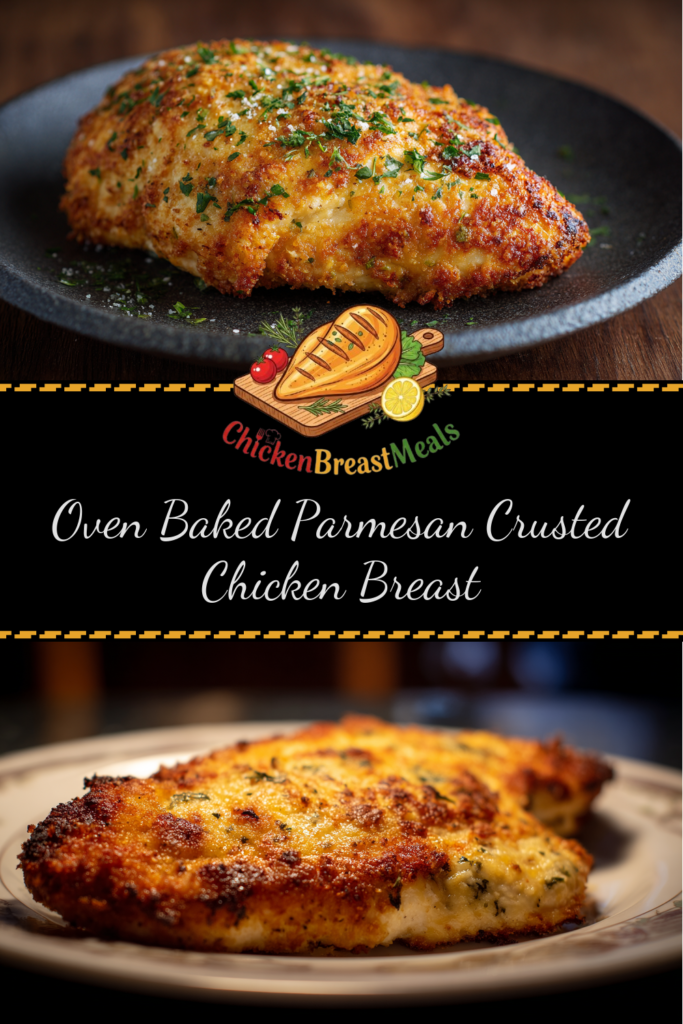
Oven Baked Parmesan Crusted Chicken Breast

Ingredients
- 2 boneless, skinless chicken breasts (8-10 oz each)
- 1 tsp kosher salt
- 1/2 tsp freshly ground black pepper
- 1 tsp garlic powder, divided 1/2 tsp for seasoning chicken, 1/2 tsp for breading mixture
- 1/2 tsp dried oregano
- 1/2 cup all-purpose flour
- 2 large eggs
- 1 tbsp water For egg wash
- 1 cup finely grated Parmigiano-Reggiano cheese Use microplane for best texture
- 1/4 cup coarsely shredded parmesan cheese For texture contrast
- 3/4 cup panko breadcrumbs
- 2 tbsp finely chopped fresh parsley
- 1/2 tsp paprika
- 2 tbsp olive oil For drizzling
Method
- Place chicken breasts between two sheets of plastic wrap and pound to an even thickness of approximately ½-inch. Pat thoroughly dry with paper towels. Season both sides with salt, pepper, ½ tsp garlic powder, and dried oregano.
- Position an oven rack in the middle position and preheat to 425°F (218°C). Set up a wire rack inside a rimmed baking sheet and lightly spray with cooking oil.
- Arrange three shallow dishes in a row. In the first dish, place flour. In the second dish, whisk eggs with 1 tbsp water until smooth. In the third dish, combine both types of parmesan cheese, panko breadcrumbs, parsley, remaining ½ tsp garlic powder, and paprika. Mix thoroughly.
- Working with one piece at a time, dredge chicken in flour, shaking off excess. Dip in egg wash, allowing excess to drip off. Press firmly into the parmesan mixture, ensuring complete coverage and pressing the mixture onto both sides of the chicken to adhere.
- Place the breaded chicken breasts on the prepared wire rack, leaving at least 2 inches between pieces. Drizzle each piece with 1 tbsp olive oil to promote browning.
- Bake in the preheated oven until the crust is golden brown and the internal temperature reaches 165°F (74°C) at the thickest part, about 15-18 minutes.
- Allow the chicken to rest on the wire rack for 5 minutes before serving. This resting period allows juices to redistribute throughout the meat while the residual heat completes the cooking process.
Note
- For maximum crispness, ensure chicken is thoroughly patted dry before breading.
- The wire rack is crucial for air circulation and preventing a soggy bottom.
- For best results, use freshly grated Parmigiano-Reggiano rather than pre-packaged grated cheese.
- Temperature management is critical – always use a meat thermometer for precision.
- Allow breaded chicken to rest 5-10 minutes before baking for better crust adhesion.